
Planerium AI Lesson Plan
Creative Expression with Environmental Numbers: 2026 Coloring and Personalization
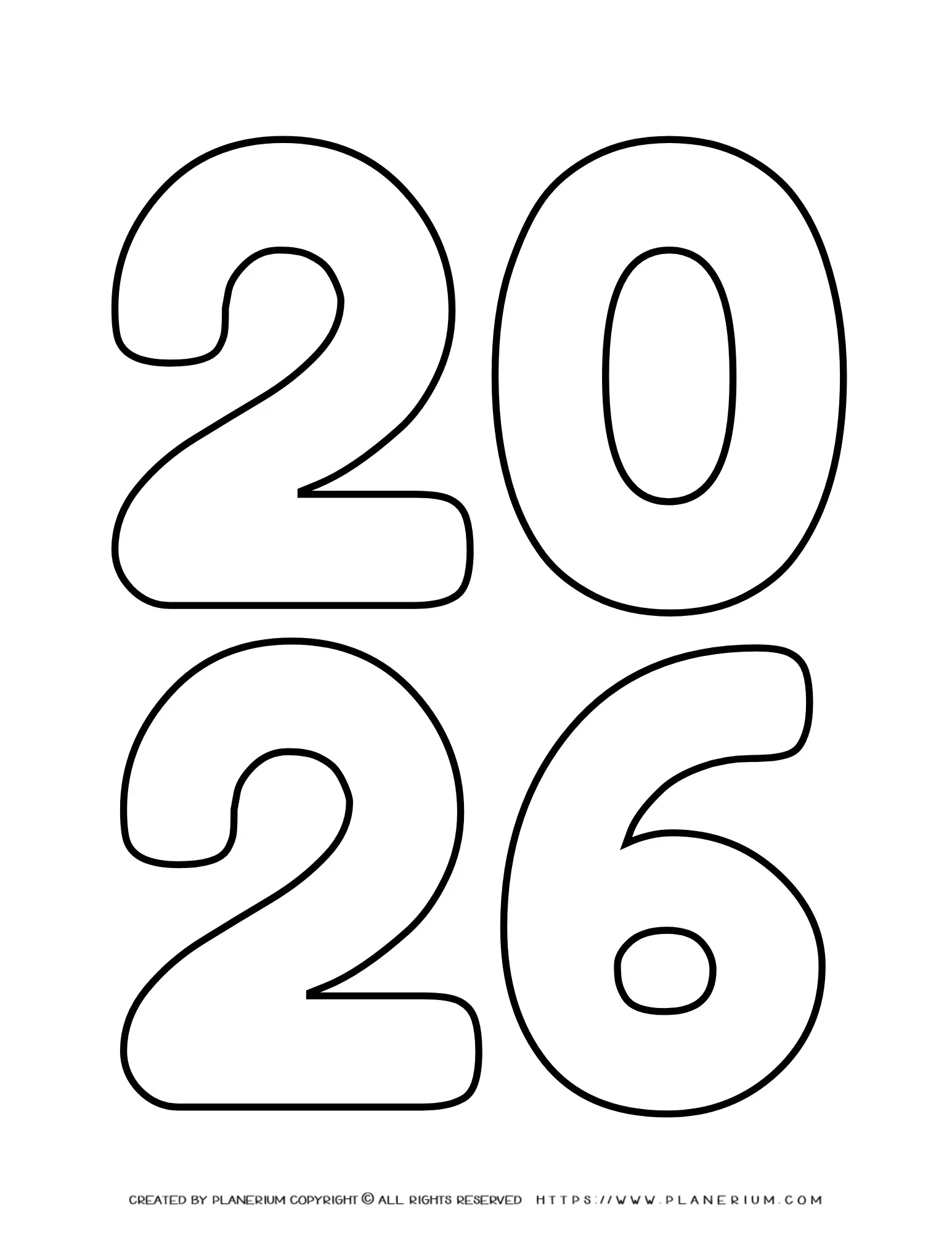
Original printable
2026 Numbers Coloring Page for Kids – Printable Bold Outline Fun Activity Make learning and celebrating the new year creative with this free 2026 Numbers Coloring Page for Kids – Printable Bold Outline Fun Activity. Designed for teachers, parents, and homeschoolers, this printab
Learning Objective
Students will use creative expression to color and decorate the numbers 2026, reflecting on how numbers can represent time in the environment and our care for it.
Teacher-Selected Inputs
Why this printable fits
This printable provides an engaging way for students to creatively express themselves while focusing on the environment and care by linking the year 2026 to how we think about time and responsibility for the world around us. It combines art with environmental education suitable for a third-grade general education class
Vocabulary
PRE-TEACH
- Environment: The world around us, including plants, animals, and air.
- Creative Expression: Showing ideas or feelings by making art.
- Personalize: To change something so it feels special to you.
USE DURING LESSON
- Color
- Decorate
- Numbers
- Outline
- 2026
Materials
- 2026 Numbers Coloring Page printable for each student
- Crayons, colored pencils, or markers
- Optional decorations such as stickers, glitter, or magazines for collaging
Prep
- Print one copy of the 2026 Numbers Coloring Page per student
- Prepare coloring materials and optional decorations
- Arrange classroom seating to allow access to materials and space for coloring
Lesson Steps
- Introduction and Engagement5 minTeacher actions: Show the printable to students and explain the numbers represent the year 2026; discuss what a year is and relate it to the environment. Ask students how they might use art to show something important about caring for our world.Teacher script: Today we will use these big numbers of 2026 to create colorful art while thinking about how we care for our environment and the future. What colors or pictures might show our care for nature?Example / model: Model pointing to the numbers and talking through choosing colors that remind you of nature, like green for trees or blue for water.Printable use: Show the blank 2026 Printable and explain its purpose as the canvas for creative expression.Move on when: Students listen and can identify the numbers and relate them to the new year and environment.Support if needed: Use sentence frames like "I will color ___ because ___" or visual cards illustrating environmental elements.
- Modeling the Creative Process7 minTeacher actions: Demonstrate coloring one number with environmental colors and adding simple decorations that represent caring for the earth. Talk about using patterns, mixing colors, or adding small symbols like leaves or water drops.Teacher script: I am coloring this '2' green because it reminds me of healthy trees. I will add some little leaves to show how we care for nature. You can use any colors or decorations you want to make your 2026 special!Example / model: Color one digit on the printable creatively with environmental symbols while describing choices.Printable use: Use the printable to model the coloring and decorating process with environmental care focus.Move on when: Students show interest and ask or share ideas about how to color and decorate their numbers.Support if needed: Provide a word bank card with color and nature words and sample decorations.
- Independent Creative Expression13 minTeacher actions: Distribute materials. Circulate to support individual choices. Prompt students to think about how their colors and decorations show care for the environment or a positive future.Teacher script: Now it’s your turn! You can color and decorate your 2026 numbers to show what you think about caring for the environment in the years to come. Remember, there’s no right or wrong way — just your ideas!Example / model: Student colors '0' blue to represent clean water and decorates with small waves drawn with a blue crayon.Printable use: Students actively color and decorate the printable, applying their ideas about environment and care through creative expression.Move on when: Students are engaged and actively coloring or decorating their printables with environmental ideas.Support if needed: Offer sentence frames to describe their work: "My number is ___ color because ___.
- Formative Check and Sharing3 minTeacher actions: Midpoint of independent work, ask students to hold up their work and share one color choice or decoration and why it relates to caring for the environment.Teacher script: Let’s pause and look at some wonderful ideas. Who wants to tell us about one color or decoration you used to show how we can care for the environment?Example / model: Student says, "I colored my 6 green because it reminds me of trees.Printable use: Students show their partially colored printable to peers and teacher to share their environmental ideas.Move on when: Students can explain the connection between their creative choices and caring for the environment.Support if needed: If a student is shy, provide a sentence frame: "I chose ___ color because ___.
- Reflection and Wrap-Up2 minTeacher actions: Encourage students to explain or write a short sentence about how their artwork represents care for the environment. Collect printables or display them for the class to admire.Teacher script: Before we finish, think about how your colors and decorations show how we care for our Earth. If you want, write or tell me one sentence about your artwork.Example / model: Student says, "I colored the numbers with blue and green to show water and trees because they are important to take care of.Printable use: Students add a sentence or discuss how their 2026 artwork relates to environmental care, finalizing the use of the printable as both an art and reflection tool.Move on when: Students verbally or in writing connect their creative work to the lesson’s environmental focus.Support if needed: Provide a sentence frame: "My numbers show ___ because ___.
Formative Check
- Step: Independent Creative Expression
- Ask students to: Hold up their partially completed 2026 printable and share one color or decoration choice with the class.
- Look for: Students can clearly explain how their creative choices represent caring for the environment or a positive future.
Success Criteria
- Students can explain the meaning of at least one color or decoration they used to represent environmental care in their 2026 artwork.
- Students can accurately identify and color all four numbers in 2026 using their choice of colors during the activity for at least 80% of the class.
Differentiation
Support: Provide sentence frames for students to describe their color and decoration choices to support verbal expression.
Scaffold tool: Sentence Frame
Standard: Students independently color and decorate the 2026 numbers reflecting their ideas about environment and care.
Extension: Students create a short poem or caption that relates to their decorated 2026 numbers and environmental care theme.
Early Finishers: Early finishers can share their artwork with a partner and discuss why they chose their colors and decorations.
Accommodations
- Provide thicker crayons or markers for students with fine motor challenges.
- Allow extra time for students who need it to complete their coloring and decoration.
- Provide visual examples and word banks to support vocabulary understanding.
- Use an audio recording option for students who have difficulty writing the reflection sentence.
Common Misconceptions
- Students might think the activity is only about coloring without connecting to environmental care.
- Some may focus on random colors rather than intentional choices representing care for the environment.
- Students might confuse the year 2026 with other numbers; repeated recognition practice may be needed.
Assessment
- Observe student participation and engagement with coloring and decoration reflecting environmental concepts.
- Check student verbal or written explanations about their creative choices.
- Evaluate if students can recognize and name each number in 2026 correctly.
Teacher Notes
Standards
- CCSS.ELA-LITERACY.SL.3.4: Report on a topic or text, tell a story, or recount an experience with appropriate facts and relevant, descriptive details.
- NGSS.3-LS4-4: Make a claim about the merit of a solution to a problem caused by environmental changes.
IF SHORT ON TIME
- Keep: Introduction and Independent Creative Expression steps
- Skip or shorten: Modeling the Creative Process and Reflection steps
FOLLOW-UP OPTIONS
- Create a class environmental calendar using numbers from other years with environmental themes.
- Write a group story about the future environment in 2026 inspired by the artwork.
- Explore recycling and reducing waste through a sorting and decorating activity.
HOME CONNECTION
Ask your child to explain the colors and decorations they chose on their 2026 artwork and how it relates to caring for the environment.