
Planerium AI Lesson Plan
Comparing and Contrasting Animal Features using the Australia Flag Coloring Page
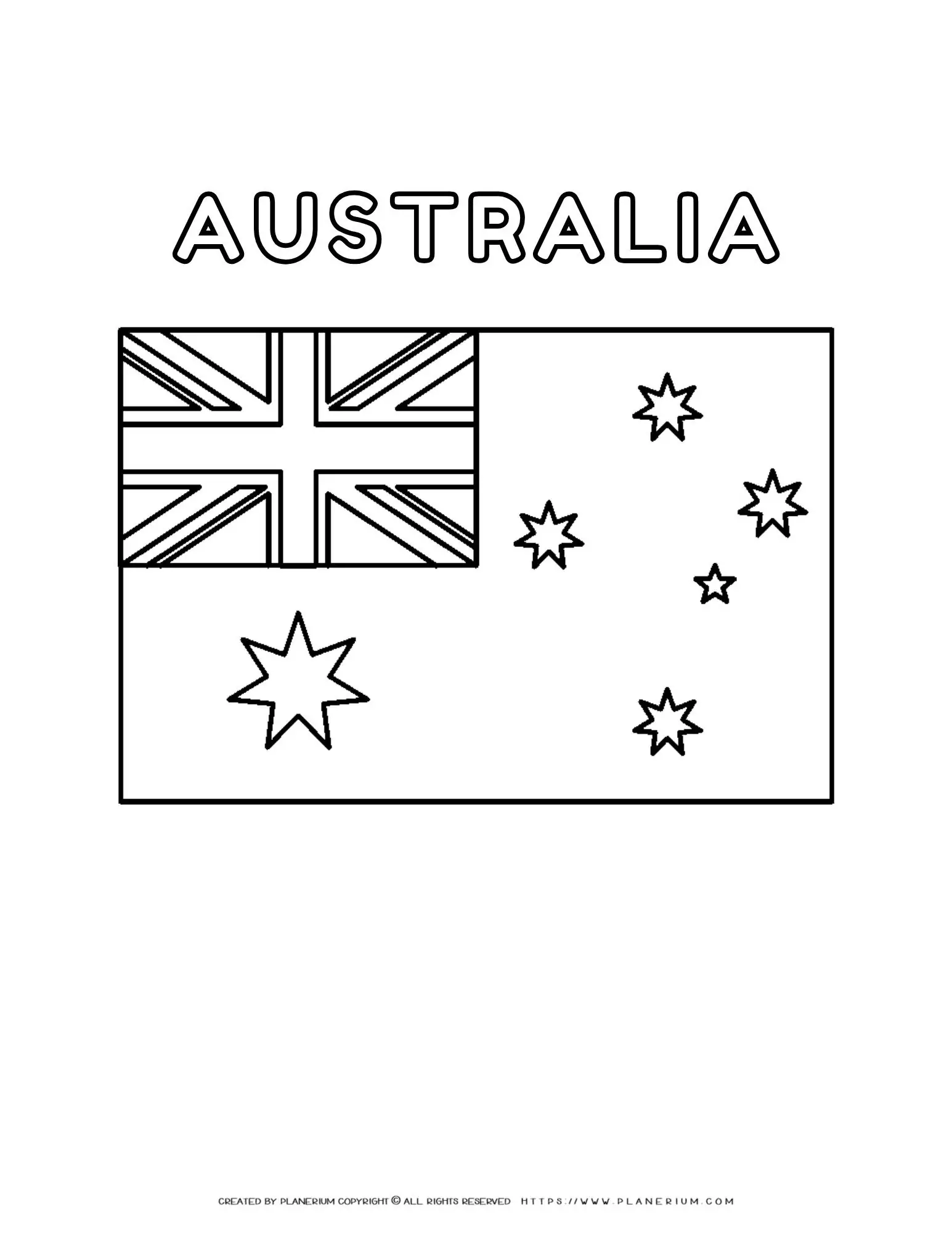
Original printable
Australia is a country known for its stunning landscapes, unique wildlife, and vibrant cities. The Australian flag features a deep blue field with the Union Jack in the upper hoist quarter, a large white seven-pointed star known as the Commonwealth Star, and a representation of t
Learning Objective
Students will compare and contrast two animals by identifying one way they are alike and one way they are different.
Teacher-Selected Inputs
Why this printable fits
This Australia Flag Coloring Page serves as an engaging visual anchor to introduce the concept of comparing and contrasting, connecting the lesson to Australia’s unique animals. The printable supports a simple hands-on activity where students practice identifying similarities and differences between animals, developing
Vocabulary
PRE-TEACH
- alike: look or are the same
- different: not the same
- feature: a part you can see
USE DURING LESSON
- animal
- compare
- contrast
- same
- different
Materials
- Printed Australia Flag Coloring Page
- Examples of two simple animal pictures or toys (e.g., kangaroo and koala)
- Crayons or colored pencils
Prep
- Print enough Australia Flag Coloring Pages for each student.
- Prepare two simple animal pictures or toys to show and compare.
- Prepare a list of simple spoken prompts for comparing and contrasting.
Lesson Steps
- Introduction3 minTeacher actions: Show the Australia Flag Coloring Page and two animal pictures. Introduce the two animals by name. Explain we will learn how to see how animals are similar and different.Teacher script: Look at these two animals. They both live in Australia. Can we find one way they are alike? And one way they are different?Example / model: These animals both have four legs. But one has a long tail and the other has a short tail.Printable use: Show printable to connect animals to Australia and introduce location context.Move on when: Students can name each animal and repeat the words alike and different.Support if needed: Repeat the examples with gestures, pointing to features on animals.
- Modeling Comparing and Contrasting3 minTeacher actions: Point to the animals again. Say one thing that is the same and one that is different. Use simple language and clearly highlight the difference and similarity.Teacher script: Both animals have ears, so they are alike because they both have ears. The kangaroo has a pouch, but the koala does not. That's different!Example / model: Alike: Both have ears; Different: Kangaroo has a pouch, koala does not.Printable use: Use animals and printable as context for comparing and contrasting words.Move on when: Students can repeat one alike and one different statement with the teacher's help.Support if needed: Use a sentence frame: 'Both have ____. But ___ has ___ and ___ does not.
- Guided Practice2 minTeacher actions: Ask students to say one thing alike and one thing different for the two animals. Provide sentence frames and assist as needed. Praise participation.Teacher script: Can you tell me one way these animals are the same? One way they are different?Example / model: Student says: Both have fur. But the koala climbs trees and the kangaroo hops.Printable use: Refer back to the animals and printable to support answers.Move on when: Students can orally share one alike and one different idea.Support if needed: Provide sentence frames and repeat back students’ answers to confirm understanding.
- Independent Practice2 minTeacher actions: Have students color parts of the Australia Flag using correct colors. While coloring, ask students aloud how they might describe two animals they know by what is alike and different.Teacher script: As you color the flag, think about two animals you know. Can you find one way they are alike? One way they are different?Example / model: Student colors flag and says: Cats and dogs both have tails but dogs bark and cats meow.Printable use: Students color the Australia Flag Coloring Page to keep engaged while reinforcing the theme of animals from Australia.Move on when: Students can name at least one similarity and difference about two animals when asked.Support if needed: Prompt with simple questions, e.g., 'Do both animals have tails?' or 'What sounds do they make?
Formative Check
- Step: Guided Practice
- Ask students to: Ask students to say one way two animals are alike and one way they are different using sentence frames if needed.
- Look for: Students can orally express one similarity and one difference between two animals in complete or partial sentences.
Success Criteria
- Students can identify at least 2 key details or vocabulary words connected to Animals.
- Students can say one way two animals are different for at least 3 different animal pairs.
Differentiation
Support: Use sentence frames such as 'Both have ___. But ___ has ___ and ___ does not.' to support student responses.
Scaffold tool: Sentence Frame
Standard: Students compare and contrast two animals using simple observations with teacher support as needed.
Extension: Students compare and contrast two animals using more than one similarity and difference without teacher prompts.
Early Finishers: Early finishers can draw two animals and tell one way they are alike and one way they are different to a partner.
Accommodations
- Provide verbal instructions and gestures to support understanding.
- Allow students to answer in single words or phrases if needed.
- Use paired or small group responses if full class sharing is difficult.
- Provide extra wait time for responses.
Common Misconceptions
- Students may only describe one animal instead of comparing both.
- Students may list features without noting similarity or difference.
- Students may confuse alike and different meaning.
Assessment
- Observe student oral responses during guided and independent practice.
- Check for the ability to state one like and one different feature about two animals.
- Note use of vocabulary words like 'alike' and 'different' during student responses.
Teacher Notes
Standards
- CCSS.ELA-Literacy.RI.K.3: With prompting and support, identify characters, settings, and major events in a story.
IF SHORT ON TIME
- Keep: Introduction step with modeling
- Skip or shorten: Independent practice coloring activity
FOLLOW-UP OPTIONS
- Compare and contrast two Australian animals using pictures or videos.
- Read a story about kangaroos and koalas and identify similarities and differences.
- Use animal sorting activities to group animals by features.
HOME CONNECTION
Ask your child to tell you one way two animals they know are alike and one way they are different.