
Planerium AI Lesson Plan
Body Parts: Creative Coloring of Emotions
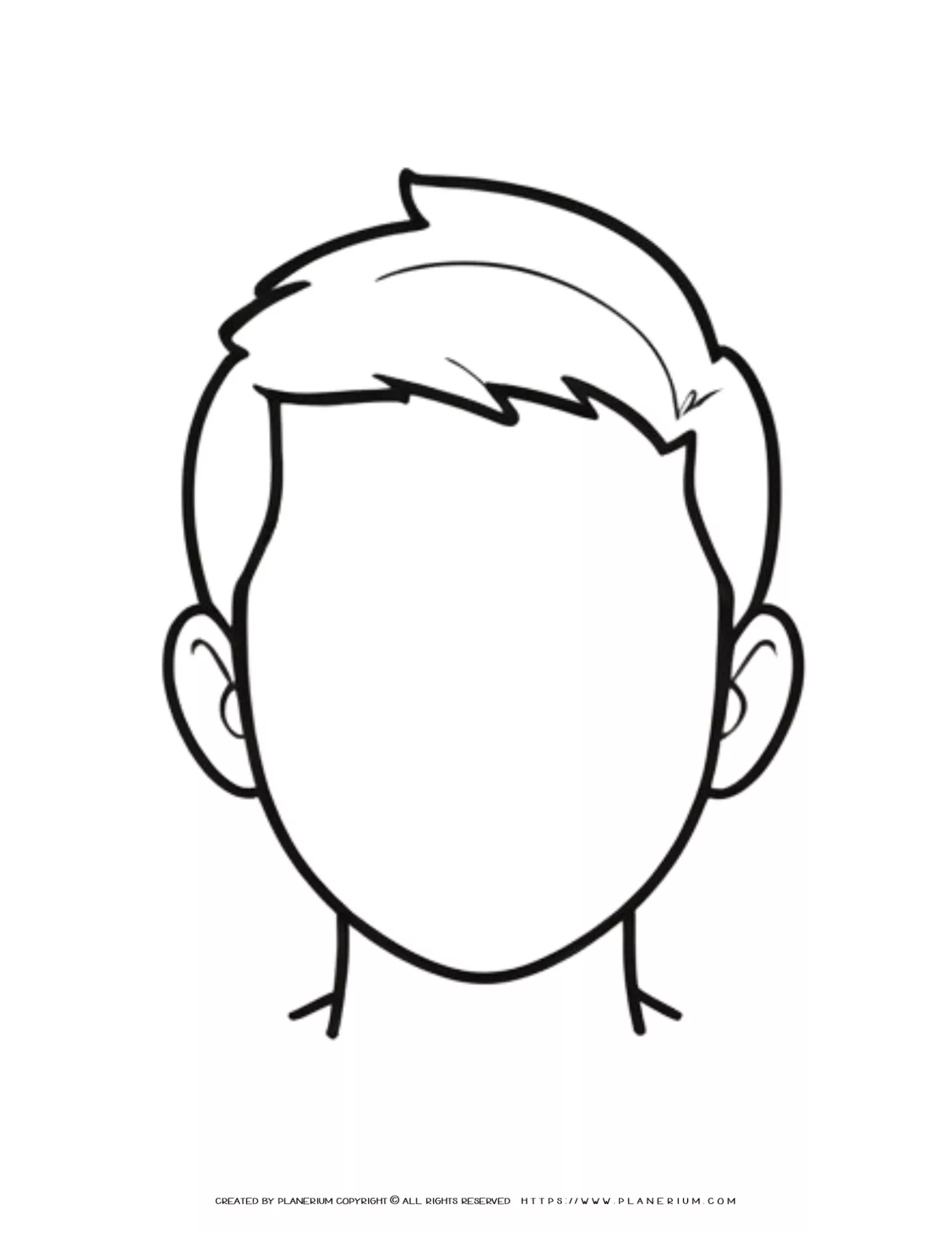
Original printable
Exploring Emotions and Creativity with Blank Man Face Coloring Printables 🎨 Dive into a versatile learning tool with our "Blank Man Face with Short Hair – Concept Art for Coloring." This printable offers a wealth of educational opportunities, perfect for teachers, parents, and
Learning Objective
Students will demonstrate creativity by coloring a blank face template, expressing different emotions and body parts through art.
Teacher-Selected Inputs
Why this printable fits
This printable encourages students to express creativity through coloring while integrating body parts representation and emotional expression, which suits Grade 3 learners in a Special Education setting.
Key Vocabulary
- Emotion
- Body Parts
- Coloring
- Expression
Prerequisite Skills
- Basic coloring skills
- Understanding of body parts
- Recognizing basic emotions
Materials
- Coloring materials (crayons, markers)
- Printed Blank Man Face template
Prep
- Print the Blank Man Face templates for each student.
- Gather coloring materials for individual use.
Lesson Steps
- Introduction5 minTeacher actions: Introduce the activity by showing the blank man face printable. Explain that they will be coloring it while thinking about different emotions and how to represent them with body parts. Emphasize creativity and self-expression.Teacher script: Today, you’ll color this blank face and show different emotions. Think about how each emotion looks on a face and how our body parts express them!Example / model: An example emotion could be happy, where the mouth is smiling and the eyes are bright.Printable use: Show the printable to the class and distribute it for individual work.Move on when: Ensure each student has a template and understands the task.Support if needed: Provide a color chart with examples of colors that represent different emotions.
- Modeling10 minTeacher actions: Demonstrate coloring one section of the face on a sample template. Use colors to convey a specific emotion, talking through your thought process. Highlight how the facial features (like mouth shape or eyes) change with different emotions.Teacher script: I’m going to color this face to show happiness. I’ll make the eyes big and the mouth smile!Example / model: Demonstrate coloring the eyes bright and the mouth curved up to show happiness.Printable use: Model the coloring technique on your own blank template.Move on when: Ask students to describe which emotion they will show and how they’ll color their face.Support if needed: Help students brainstorm emotions they might want to color.
- Independent Coloring10 minTeacher actions: Allow students to color their templates independently. Walk around to observe their work, providing support and encouragement as they express their creativity and emotions through their coloring.Teacher script: Now it’s your turn! Remember, think about the emotion you want to show while you color.Example / model: Students might color the face with dark colors to express sadness or bright colors for happiness.Printable use: Students use the blank template to fill in their artistic expression of emotions.Move on when: Check that students are engaged and applying creativity in their coloring.Support if needed: Provide additional templates or assist with coloring techniques if students struggle.
- Reflection & Sharing5 minTeacher actions: Bring the class together and allow students to share their colored faces. Encourage them to explain the emotions they chose and how they expressed them. Facilitate a discussion about body parts that might express those emotions.Teacher script: Let’s share our faces! Who wants to tell us about their emotions and colors?Example / model: A child might say, 'I colored my face blue because that shows I’m sad.Printable use: Students can display their finished printables in front of the class for sharing.Move on when: Ensure each student has a chance to speak about their artwork.Support if needed: Provide prompts for students who may be shy to share or need help articulating their thoughts.
Checks for Understanding
- Students can explain the emotions depicted on their colored faces.
- Students can identify at least one body part associated with each emotion.
Success Criteria
- Students completed the coloring activity with personal expression.
- Students discussed their artwork clearly and related it to emotions.
Differentiation
- Provide pre-colored examples for students needing extra support.
- Allow students to use stickers or images to represent emotions instead of coloring, if needed.
Accommodations
- Offer a one-on-one session for students who struggle with coloring or expressing emotions.
- Use adaptive coloring tools for students with fine motor challenges.
Common Misconceptions
- Students may think only facial expressions convey emotions and not consider other body parts.
- Some students may color without thinking of emotion context.
Assessment
- Observe coloring creativity and technique during the independent work phase.
- Evaluate understanding through the sharing phase and discussion.
Extensions
- Encourage students to create a story around their colored character and emotions.
- Integrate this activity with a lesson on empathy and understanding others' feelings.
How to Use the Printable
- Students will use the blank man face template for the main activity, applying their understanding of emotions in their artwork.
- The printable serves as a canvas for students to express their creativity and emotions through coloring.
Teacher Notes
- Be patient and provide encouragement. Creativity can differ widely among students, and that's okay!
- Encourage open sharing of ideas and emotions. This fosters community and understanding in the classroom.