
Planerium AI Lesson Plan
Exploring Nature Through Creative Expression with a Camping Scene
Original printable
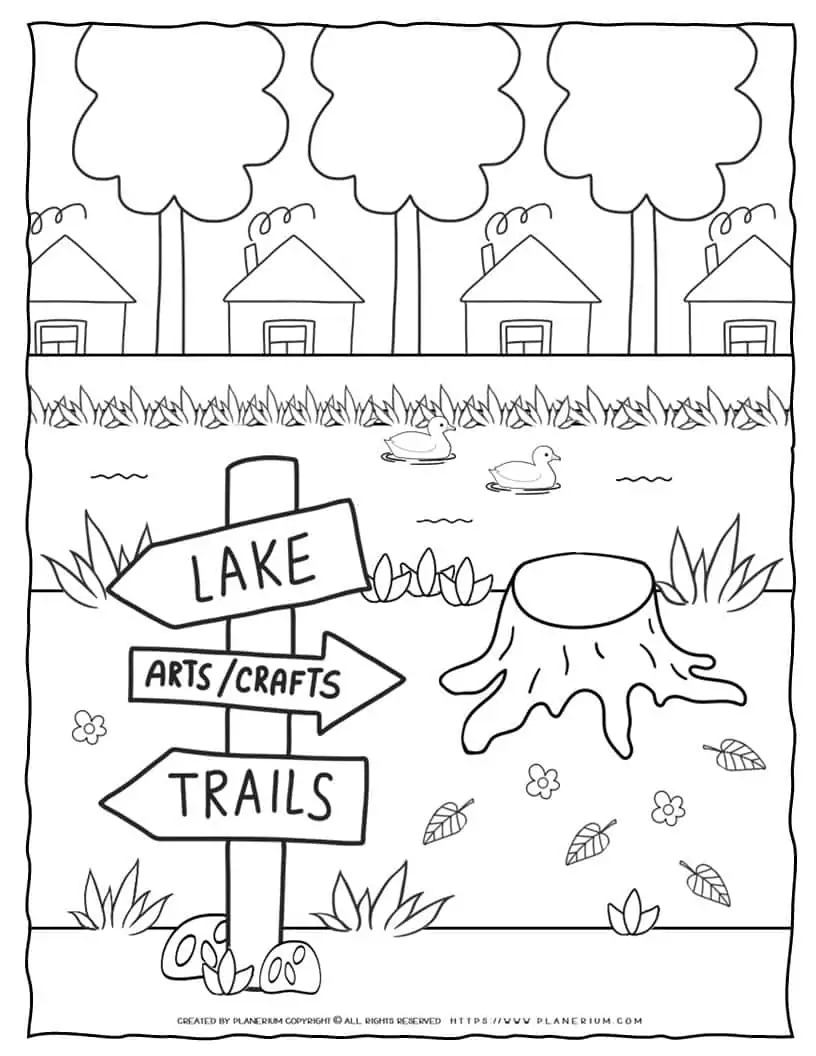
Experience the Adventure of Camping with Our Coloring Page for Kids! Introduce children to the excitement of camping with our Camping Scene Coloring Page. This detailed illustration provides a great opportunity for children to learn about nature, camping, and outdoor ac
Learning Objective
Students will use creative expression to identify and describe natural elements found in a camping scene while independently applying new nature vocabulary.
Teacher-Selected Inputs
Why this printable fits
This printable features a detailed camping scene that offers a perfect opportunity for third graders to explore nature visually and express their understanding creatively, supporting the nature subject and enhancing creative expression skills.
Vocabulary
PRE-TEACH
- ecosystem: A place where plants and animals live and work together.
- habitat: The home or environment of a plant or animal.
- observation: Looking carefully to notice details.
USE DURING LESSON
- lake
- tree
- trail
- duck
- stump
Materials
- Camping Scene printable
- colored pencils or crayons
- whiteboard or chart paper
- markers
Prep
- Print one Camping Scene coloring page per student
- Prepare word bank cards with vocabulary words and definitions
- Gather colored pencils or crayons
- Set up a space for group discussion and display
Lesson Steps
- Introduction and Vocabulary9 minTeacher actions: 1. Show the printable to the class. 2. Introduce and explain the pre-teach vocabulary using simple definitions and examples. 3. Write vocabulary words on the board. 4. Model identifying one natural element in the scene.Teacher script: Let's look closely at this camping scene. We will learn new words that help us talk about nature and what we see here. Listen as I explain ecosystem, habitat, and observation.Example / model: Point to the trees and say, "These trees are part of the ecosystem, or home, for many animals.Printable use: Teacher displays the printable to introduce the scene and vocabulary visually.Move on when: Students can repeat or explain one of the new vocabulary words aloud.Support if needed: Use word_bank_card to show words and pictures while explaining.
- Guided Observation and Discussion9 minTeacher actions: 1. Guide students to find and name objects in the scene using vocabulary words. 2. Ask students to describe one thing they see. 3. Chart their answers using vocabulary words. 4. Model using a sentence frame to describe items.Teacher script: Can you find the lake in the picture? Tell me one thing you see near the lake using our new words. Here is how I can say it: I see ducks swimming in the lake.Example / model: Student says, "I see a stump near the trail.Printable use: Students point to parts of the printable as they discuss them.Move on when: Students can name and describe at least two elements from the scene using vocabulary words.Support if needed: Provide sentence_frame: "I see ___ near/on the ___.
- Mid-Lesson Formative Check9 minTeacher actions: Ask students to point to an object on their printable and name it using one of the vocabulary words.Teacher script: Show me on your picture where the lake is and say the word 'lake'.Example / model: Student points correctly to the lake and says, "lake.Printable use: Students point to objects on their printable to demonstrate understanding.Move on when: Students accurately identify and say vocabulary words related to the scene.Support if needed: Remind students of vocabulary words using word_bank_card.
- Creative Expression Activity9 minTeacher actions: 1. Instruct students to color the printable, encouraging them to think about nature colors. 2. Have students write or dictate a simple sentence about one part of the camping scene using vocabulary words and sentence frames. 3. Circulate and support writing or drawing. 4. Have several students share their sentences aloud.Teacher script: Color your camping scene. When you finish, write or tell me one sentence about something you see in nature here. Use our new words if you can.Example / model: A student writes or says, "The duck swims in the lake.Printable use: Students use the printable to color and then write or orally describe parts of the scene.Move on when: Students complete at least one sentence describing an element in the scene using vocabulary.Support if needed: Provide sentence_frame and assist with word spelling or oral dictation.
- Review and Share9 minTeacher actions: 1. Invite students to share their sentences or descriptions with the class. 2. Reinforce vocabulary usage. 3. Summarize what the scene shows about nature and camping.Teacher script: Who would like to share their sentence? Let's listen for our nature words.Example / model: A student shares, "I see leaves and a tree near the trail.Printable use: Students reference their coloring printable as they share.Move on when: Students use vocabulary words correctly during sharing.Support if needed: Prompt with questions or sentence frames during sharing.
Formative Check
- Step: Mid-Lesson Formative Check
- Ask students to: Point to the lake on the printable and say the word 'lake'.
- Look for: Correctly identifying and pronouncing vocabulary words with confidence.
Success Criteria
- Students can identify at least 2 key details or vocabulary words connected to Nature.
- Students can describe one element in a complete sentence using at least one new vocabulary word, either orally or in writing.
Differentiation
Support: Use word bank cards with pictures and words to help students recall vocabulary during discussion and writing.
Scaffold tool: Word Bank Card
Standard: Students complete coloring and describe the camping scene using vocabulary in oral or written sentences.
Extension: Students write a short paragraph combining at least three vocabulary words to describe the scene and explain why camping is fun.
Early Finishers: Students draw and label an additional nature element they imagine could be part of the camping scene.
Accommodations
- Provide sentence frames for writing and speaking.
- Allow oral responses instead of writing.
- Offer extra one-on-one support with vocabulary.
- Use visual aids to reinforce new words.
Common Misconceptions
- Students may confuse habitat with ecosystem; clarify with examples.
- Students might think all animals live near the lake; explain variation in habitats.
- Students may not recognize some natural elements; use clear visuals and repetition.
Assessment
- Observe students’ ability to use vocabulary words during discussion and sharing.
- Review student sentences for correct use of new vocabulary.
- Check ability to identify objects on the printable accurately.
Teacher Notes
Standards
- NGSS.3.LS4.1: Analyze and interpret data from observations to describe patterns in the natural world
- CCSS.ELA-LITERACY.SL.3.4: Report on a topic or text, tell a story, or recount an experience with appropriate facts and relevant details
IF SHORT ON TIME
- Keep: Step 1: Introduction and Vocabulary
- Skip or shorten: Step 4: Creative Expression Activity can be shortened by limiting writing portion
FOLLOW-UP OPTIONS
- Plan a nature walk to observe real ecosystems and habitats.
- Create a group mural representing different natural habitats.
- Research and present on local wildlife and plants in camping areas.
HOME CONNECTION
Ask your child to find and describe a natural place at home or nearby using the new vocabulary words.