
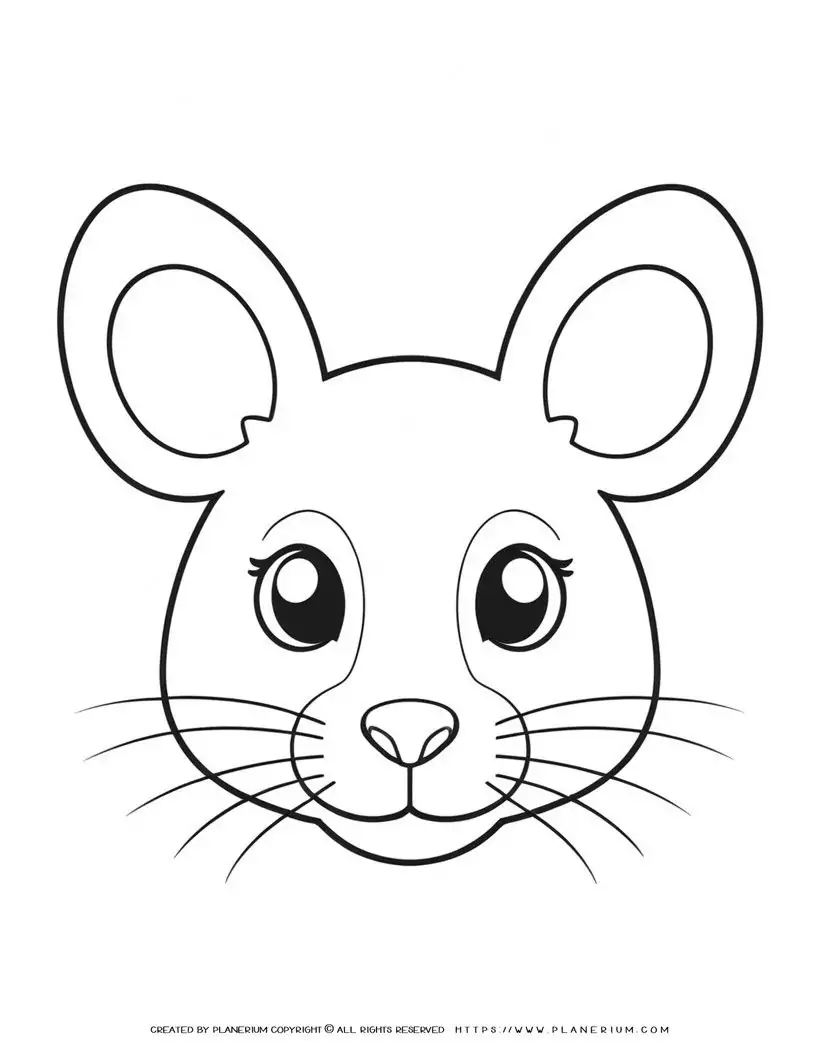
Original printable
Mouse Face Coloring Face Printable Cute Mouse Face Black Eyes Front View Coloring Page for Kids! 🎨📚 This coloring page is perfect for engaging young learners while developing important skills. Here are 3 key benefits of using this printable: 1️⃣ Creativity: Let your child'
Learning Objective
Students will improve their subtraction skills by engaging in an interactive coloring activity related to animals.
Teacher-Selected Inputs
Why this printable fits
This printable aligns with the lesson's goal of enhancing subtraction skills through creative engagement with an animal theme, making learning enjoyable for third graders.
Key Vocabulary
- subtract
- difference
- animal
- count
- color
Prerequisite Skills
- Basic understanding of subtraction
- Ability to color within lines
Materials
- Cute Mouse Face printable
- Coloring materials (crayons, markers, colored pencils)
- Whiteboard and markers
Prep
- Print the Cute Mouse Face coloring pages for each student.
- Prepare a space for students to color comfortably.
Lesson Steps
- Introduction5 minTeacher actions: Gather students in a circle and introduce the activity. Explain how they will be using subtraction to help them figure out how to color the mouse face. Ask students to share their favorite animals to create excitement.Teacher script: Today we’re going to subtract to help us color our cute mouse! What’s your favorite animal?Example / model: You might say, 'If I have 5 apples and I eat 2, how many do I have left? Let's find out as we color!',Printable use: Hand out the Cute Mouse Face printable to each student as a visual for their subtractions while coloring.Move on when: Ensure all students have their printables ready and understand the subtraction concept by asking one or two simple questions.Support if needed: Provide additional examples on the whiteboard for students struggling with subtraction.
- Modeling5 minTeacher actions: Demonstrate on the whiteboard how to do a subtraction problem using animal illustrations. Use a simple example like 7 – 3. Explain each step out loud as you solve it together with the class.Teacher script: Let’s work together! If we have 7 berries and give 3 to our mouse, how many does the mouse have now?Example / model: 7 – 3 = 4 berries left for the mouse!Printable use: Show how to color the mouse's berries based on the subtraction task, linking coloring with problem-solving.Move on when: Look for students who understand the modeling and are ready to apply it.Support if needed: Pair students who need extra help with a stronger peer to discuss the concept together.
- Independent Practice10 minTeacher actions: Allow students to start coloring their mouse face while they solve their own subtraction problems. Rotate the room to provide support and check in with each student.Teacher script: Now it's your turn! As you color, think of some subtraction problems that involve different colors or features of your mouse.Example / model: Ask, 'If my mouse has 5 whiskers and I color 2, how many are still uncolored?Printable use: Encourage them to write their subtraction problems on the back of the printable once they finish coloring.Move on when: Observe if students are engaging in subtraction as they color and whether they can express their problems verbally or on paper.Support if needed: Provide subtraction flashcards or counting manipulatives for students needing additional guidance.
- Closure5 minTeacher actions: Bring the students back together and ask them to share one of their subtraction problems and how they solved it. Highlight creativity in coloring and problem-solving.Teacher script: Who can share their subtraction problem with the class? What did you color?Example / model: Student might say, 'I had 6 flowers but colored 2. I have 4 left!Printable use: Collect the printables for assessment, looking for both coloring and subtraction examples.Move on when: Ensure each student can articulate a subtraction problem based on their coloring experience.Support if needed: Encourage students who didn’t correctly solve their problems to try and explain their thinking.
Checks for Understanding
- Students can articulate their subtraction problems verbally.
- Students can write down their own subtraction problems on the back of their printables.
- Check for completed colorings that show engagement with the task.
Success Criteria
- Students correctly solve at least 3 subtraction problems during the activity.
- Students participate in the coloring activity, demonstrating fine motor skills and creativity.
- Students engage in group discussions about their problems and coloring.
Differentiation
- Provide additional visual aids such as number lines for students needing support.
- Use smaller subtractions (e.g., 1-5) for students with lower confidence in math skills.
Accommodations
- Allow extra time for students who require it to complete coloring and subtraction problems.
- Provide one-on-one assistance to students struggling with the concept.
Common Misconceptions
- Students may confuse the order of numbers in subtraction (e.g., thinking 3 – 7 = 4).
- Some students might not connect their coloring with the subtraction task effectively.
Assessment
- Review printed work for the completion and correctness of subtraction problems on the back of each sheet.
- Observe and take anecdotal notes on student engagement and understanding during the coloring activity.
Extensions
- Encourage students to create their own animal-themed subtraction problems using their finished coloring pages.
- Ask students to turn their coloring pages into a story, using subtraction within the narrative.
How to Use the Printable
- The Cute Mouse Face printable serves both as a coloring activity and a basis for practicing subtraction problems, making math interactive and fun.
- With this artwork, students can express creativity while practicing important mathematical skills, aligning with educational standards in a thematic way.
Teacher Notes
- Keep the atmosphere fun and energetic to maintain student engagement.
- Circulate among students to offer praise and support, and celebrate creative coloring choices. They feel encouraged to share their math ideas.