
Planerium AI Lesson Plan
Kindergarten Emotions Storytelling with Self Portraits
Original printable
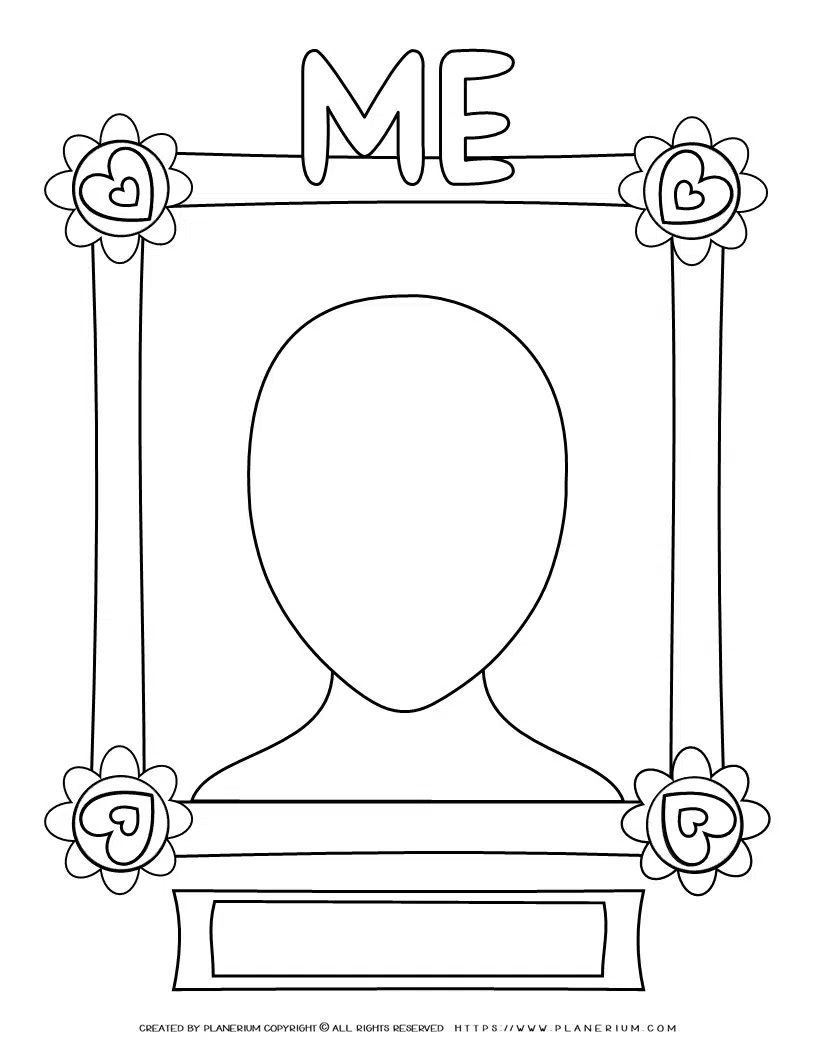
Self Portrait template for classroom or homeschool students: use this black-and-white coloring-page style sheet to draw their face, color the surrounding frame, and add their name on the tag; includes a built-in frame and "Me" label for display. Promotes observation, fine-motor c
Learning Objective
Students will create and share a simple story about their emotions by drawing a self portrait and expressing how they feel.
Teacher-Selected Inputs
Why this printable fits
This printable supports emotion learning in Kindergarten by providing a focused space for students to draw their face and tell a story about their feelings, encouraging oral storytelling and emotional expression aligned to their developmental level.
Vocabulary
PRE-TEACH
- Emotion: A feeling inside you.
- Portrait: A picture of a face.
- Story: Telling what happens.
USE DURING LESSON
- Face
- Name
- Frame
- Draw
Materials
- Self Portrait printable for each student
- Pencils or crayons
Prep
- Print one Self Portrait sheet per student
- Prepare a word bank card with simple emotion words (happy, sad, mad)
Lesson Steps
- Introduction10 minTeacher actions: 1. Present the printable and explain today's activity to draw their face and share a story about how they feel. 2. Model an example drawing and emotion story. 3. Point out the frame and name area on the printable.Teacher script: Today we will draw a picture of our faces and tell a story about how we feel. Let's look at this special paper and see where to draw and write your name.Example / model: Teacher shows a self portrait with a happy face and says, 'I feel happy today!Printable use: Introduce the blank Self Portrait printable as the space for drawing and storytelling.Move on when: Students have their printables and pencils ready and listen attentively to the explanation.Support if needed: Use a sentence frame, such as 'I feel ___ today because ___,' to guide students in talking about emotions.
- Drawing Self Portrait10 minTeacher actions: 1. Guide students to observe their face or imagine it. 2. Model drawing basic facial features on the printable. 3. Assist and encourage students as they draw their faces.Teacher script: Look closely at your face or remember it. Now draw your eyes, nose, and mouth to show how you feel.Example / model: Teacher draws eyes, nose, mouth, and hair portraying a happy expression on the printable.Printable use: Students draw facial features inside the frame area on their Self Portrait printable.Move on when: Students have drawn facial features that show an emotion.Support if needed: Provide verbal prompts or show simple drawings to help students who need assistance.
- Sharing Emotion Stories10 minTeacher actions: 1. Invite students to share their drawings and say a sentence about how they feel. 2. Model sharing your own emotion story first. 3. Encourage use of the sentence frame for oral storytelling.Teacher script: Who would like to tell us about their face? You can say, 'I feel ___ today.Example / model: Teacher shares, 'I feel happy today because I played with my friends.Printable use: Students share their Self Portrait and orally express their emotion story with the class.Move on when: Students use the sentence frame to verbally share their emotion and show their drawing.Support if needed: Pair students with a partner to practice their sentence before sharing with the group.
Formative Check
- Step: Drawing Self Portrait
- Ask students to: Draw facial features to represent an emotion.
- Look for: Students include eyes, nose, and mouth that indicate how they feel.
Success Criteria
- Students can complete at least 1 Storytelling task using the printable.
Differentiation
Support: Use a sentence frame to help students express their emotion orally (e.g., 'I feel ___ today because ___').
Scaffold tool: Sentence Frame
Standard: Students draw their face and share an oral sentence about their emotion using the printable.
Extension: Add more sentences to tell additional details about their feelings or what happened.
Early Finishers: Draw a small picture around the frame representing something that makes them feel that emotion.
Accommodations
- Provide tracing lines for name writing if needed.
- Allow oral dictation for name if writing is difficult.
- Offer verbal prompts and modeling for drawing facial features.
- Use an assigned partner for practicing emotion sentence frames.
Common Misconceptions
- Students may confuse facial features associated with different emotions.
- Students may say 'happy' for every picture without exploring other emotions.
- Students may have difficulty verbally expressing emotions clearly.
Assessment
- Check that students' self portraits include facial features expressing an emotion.
- Listen for use of emotion vocabulary in students' oral stories.
- Observe if students can use the sentence frame independently or with support.
Teacher Notes
Standards
- CCSS.ELA-LITERACY.SL.K.4: Describe familiar people, places, things, and events with prompting and support.
IF SHORT ON TIME
- Keep: Drawing Self Portrait and oral storytelling about emotions.
- Skip or shorten: Skip the name writing step or simplify sharing time.
FOLLOW-UP OPTIONS
- Create a class book titled 'My Emotions' with drawings and sentences.
- Use emotion cards to play matching games relating feelings to facial expressions.
- Have students sequence emotion stories using drawings and simple sentences.
HOME CONNECTION
Encourage families to have their child draw a self portrait at home and share how they feel with family members.