
Planerium AI Lesson Plan
Third Grade Social Studies Writing Lesson: Create a Travel Suitcase Label and Sentences
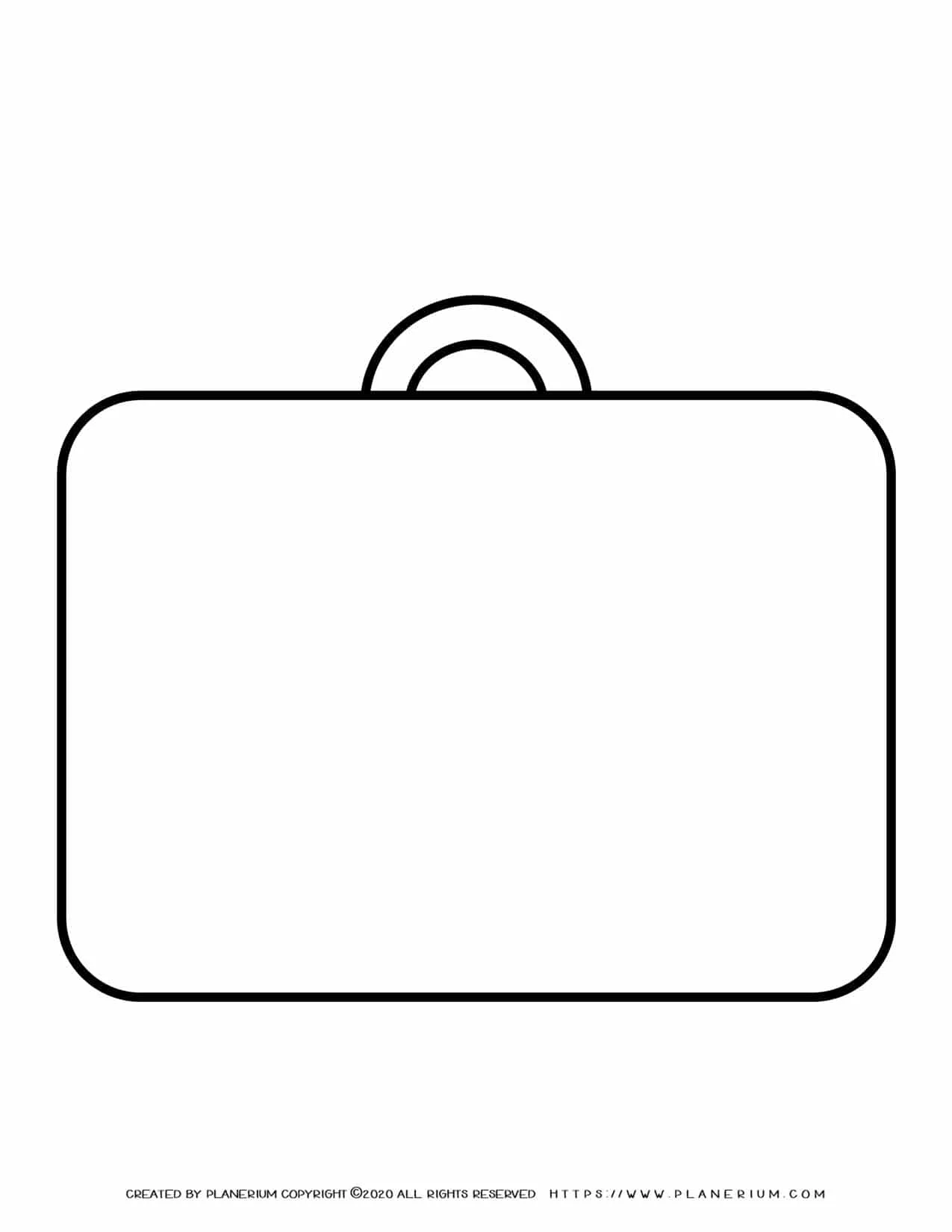
Original printable
Printable suitcase outline template for kids to color, decorate, and use in travel themed crafts, writing activities, and classroom projects.
Learning Objective
Students will write simple descriptive sentences about items they would pack for a trip using the suitcase template to organize their ideas in a social studies context.
Teacher-Selected Inputs
Why this printable fits
This printable suitcase template supports a social studies lesson by allowing students to connect travel and transportation themes to writing practice. It provides a visual and structured space for students to plan and label the items they would pack, encouraging descriptive sentence writing related to social studies.
Vocabulary
PRE-TEACH
- destination: A place to go on a trip.
- travel: Go from one place to another.
- belongings: Things you take with you.
USE DURING LESSON
- suitcase
- pack
- label
- sentence
- describe
Materials
- Printed suitcase template for each student
- Pencils
- Colored pencils or crayons
- Word bank cards with travel and packing words
Prep
- Print enough suitcase templates for all students
- Prepare word bank cards with common travel item words (e.g., clothes, shoes, book)
- Write sentence frame on board or chart paper
Lesson Steps
- Introduction and vocabulary pre-teaching6 minTeacher actions: Introduce vocabulary words with clear definitions and examples; show the suitcase template; explain that the suitcase is a place to plan what to pack for a trip; model labeling a simple item on the suitcase.Teacher script: Today we are going to write about what we would pack in a suitcase for a trip. A suitcase is where you put your belongings when you travel. Let's look at the word 'destination' — that's where you are going. Let's label aExample / model: Teacher draws a simple t-shirt on the suitcase and writes 'shirt' next to it.Printable use: Show the blank suitcase template and model writing one word label on it.Move on when: Students can explain what a suitcase is and give examples of items to pack before labeling.Support if needed: Use word bank cards to help students pick words to label the suitcase.
- Guided writing and labeling8 minTeacher actions: Guide students to choose 3–4 items they would pack; help them write and label these on the suitcase; use sentence frames to help them form descriptive sentences about the items.Teacher script: Now, think about what you would pack in your suitcase. You can pick 3 or 4 items. Let's write the names on the suitcase and then write a sentence about each item, like 'I pack my shirt because it is soft.Example / model: Student writes 'shirt' label on suitcase and the sentence: 'I pack my shirt because it is soft.Printable use: Students write words labeling items directly on the suitcase template and compose short sentences nearby or on the back.Move on when: Students have legible labels on at least 3 items and beginning sentences about those items.Support if needed: Provide sentence frames: 'I pack my ___ because ___. ' and word bank cards for item names.
- Formative Checkpoint: Share writing5 minTeacher actions: Ask students to share aloud one item and sentence they wrote; listen for correct sentence formation and clear labeling.Teacher script: Let's share one thing you packed and a sentence about why you packed it. This helps me see how all of you are doing.Example / model: Student says, 'I pack my book because I like to read,' and points to the word 'book' label on the suitcase.Printable use: Use the suitcase labels and sentences as reference during sharing.Move on when: Students can orally share a sentence about a labeled item that includes a reason or description.Support if needed: Prompt with sentence frames or repeat the sentence model.
- Independent completion and decoration11 minTeacher actions: Allow students time to finish writing and decorate their suitcase with colors or drawings; circulate to offer writing support; encourage use of vocabulary and sentence correctness.Teacher script: Now, finish writing your sentences and label any last items you want to pack. Then, you can decorate your suitcase using colors or drawings.Example / model: Student writes labels and sentences on suitcase, colors it, and draws travel stickers for decoration.Printable use: Students use the suitcase template for final writing and decoration work.Move on when: Students complete at least 3 labeled items with corresponding sentences.Support if needed: Assign a partner for peer help or provide additional word bank cards.
Formative Check
- Step: Guided writing and labeling
- Ask students to: Share aloud one labeled item and a descriptive sentence about why they packed it.
- Look for: Correct labeling on suitcase and sentences using simple sentence structure with a reason or description.
Success Criteria
- Students can write and label at least 3 items they would pack on the suitcase template with readable handwriting.
- Students can write simple sentences describing or explaining why they would pack each item, producing at least 2 complete sentences with accurate word usage.
Differentiation
Support: Provide word bank cards with travel-related vocabulary to help students label items and form sentences.
Scaffold tool: Word Bank Card
Standard: Students write 3–4 labeled items on the suitcase and write simple descriptive sentences about each item using sentence frames.
Extension: Students write more complex sentences including adjectives and reasons for packing each item without using sentence frames.
Early Finishers: Early finishers can write a short paragraph about a trip they would take and what they pack in their suitcase.
Accommodations
- Provide sentence frames to support sentence writing.
- Allow use of drawings to represent words before labeling.
- Pair students for peer support during writing.
- Offer extra time as needed.
Common Misconceptions
- Students may write only labels without sentences; remind them to write a full sentence.
- Students may spell words phonetically; support with word bank and gentle correction.
- Students might list items unrelated to travel; redirect to focus on travel packing.
- Students may confuse the purpose of suitcase as storage; clarify it's for travel belongings.
Assessment
- Check that students label items on the suitcase template with readable writing.
- Evaluate the sentences to ensure they describe or explain the item and relate to travel.
- Observe oral sharing during formative check to assess sentence formation and vocabulary use.
Teacher Notes
Standards
- CCSS.ELA-LITERACY.W.3.2: Write informative/explanatory texts to examine a topic and convey ideas clearly.
- CCSS.ELA-LITERACY.SL.3.4: Report on a topic or text, tell a story, or recount an experience with appropriate facts and relevant descriptive details.
IF SHORT ON TIME
- Keep: Step 1: Introduction and vocabulary pre-teaching
- Skip or shorten: Shorten Step 4: Independent completion and decoration to focus just on writing.
FOLLOW-UP OPTIONS
- Have students write a postcard or letter describing their travel destination and why they want to visit.
- Create a class travel brochure using information collected from individual suitcases.
- Integrate a geography lesson locating destinations students label on their suitcases.
HOME CONNECTION
Ask your child to talk about what they would pack in a suitcase if they went on a family trip.