
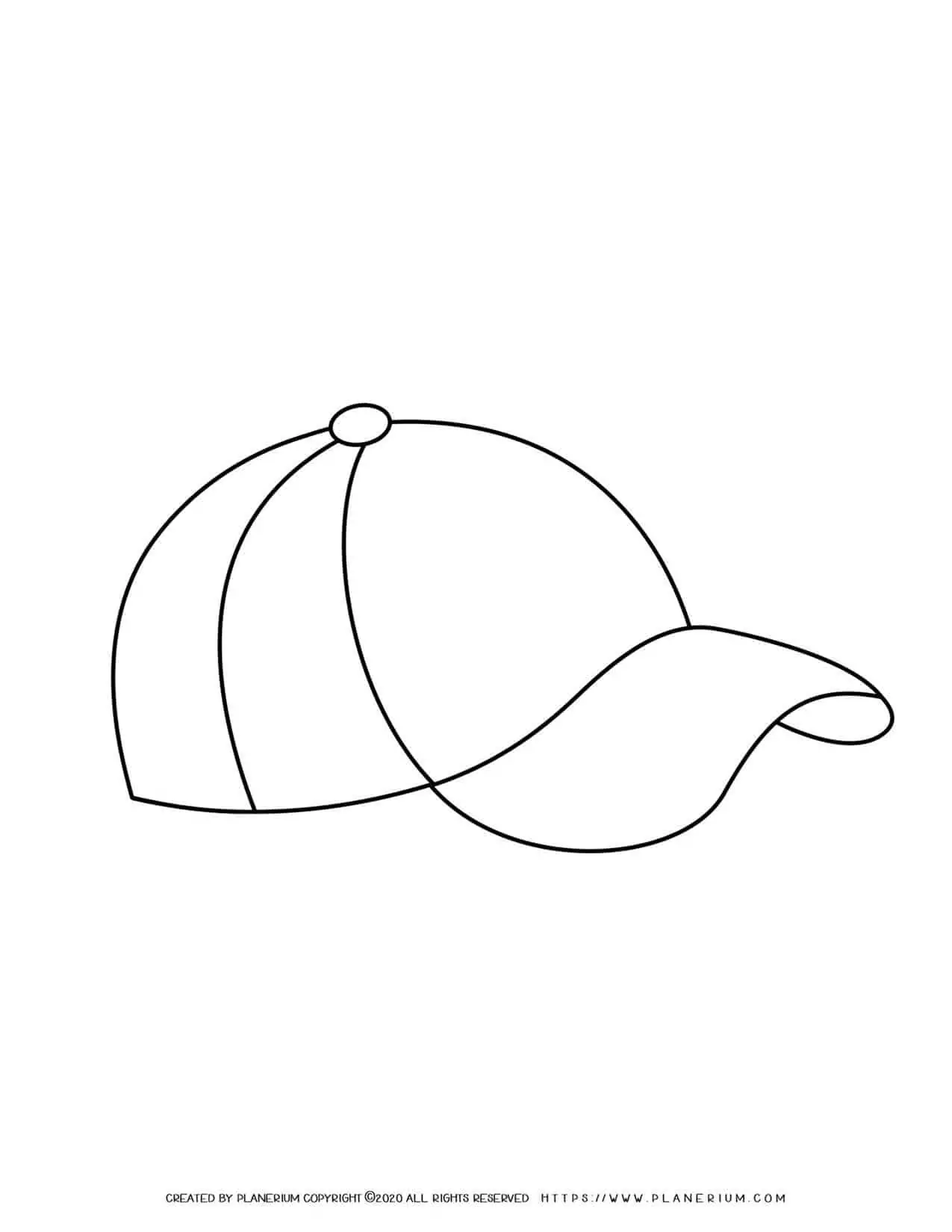
Cap-Outline
1052
Views
8
Prints
9
Saves
Cap outline activity for classroom or homeschool students: color and decorate, practice cutting and pattern choices, label parts and write a sentence, and fold or divide the template to explore symmetry and fractions, supporting fine motor control, spatial reasoning, vocabulary, and following multi-step directions.
Grades
K
First
Second
Third
Fourth
Fifth
Sixth
About Cap-Outline
What Does Cap-Outline Help Students Learn?
Students practice fine motor control and creative decision-making as they color and decorate a cap outline. The activity also supports vocabulary growth, spatial reasoning (symmetry and placement), and following multi-step directions.
Skills Practiced:
- Fine motor control
- Color and pattern recognition
- Creativity and design thinking
- Vocabulary and descriptive language
- Spatial awareness and symmetry
- Following multi-step directions
Ways to Use This Printable:
- Decorate the cap outline during an art center to practice cutting, coloring, and pattern choices.
- Assign as a writing prompt so students label parts of their design and write a sentence about who would wear it.
- Use in math or science lessons by folding or dividing the template to explore symmetry, fractions, or seasonal comparisons.
FAQ
Students practice fine motor control and creative decision-making as they color and decorate the Cap-Outline. The activity also supports vocabulary growth, spatial reasoning (symmetry and placement), and following multi-step directions.
Use it in an art center to practice cutting, coloring, and pattern choices, or assign it as independent morning work. You can also use it as a writing prompt by having students label parts of their design and write a sentence about who would wear it.
For support, simplify the task by limiting color choices, giving clear step-by-step directions, or pre-cutting pieces to reduce cutting demands. To challenge learners, ask for more complex patterns, require symmetrical designs by folding/dividing the template, or add descriptive labels and sentences about their design.
Have students fold or divide the template to test and create symmetrical designs or to represent fractions or seasonal comparisons. Another extension is to have students label design elements and write a short description linking vocabulary to their choices.
Watch for improved fine motor control (cutting and coloring precision), more deliberate color and pattern choices, correct placement and symmetry, and ability to follow multi-step directions. Review labels or sentences for use of vocabulary and descriptive language to assess expressive growth.