Male Muscles Anatomy Model
1450
Views
13
Prints
1
Saves
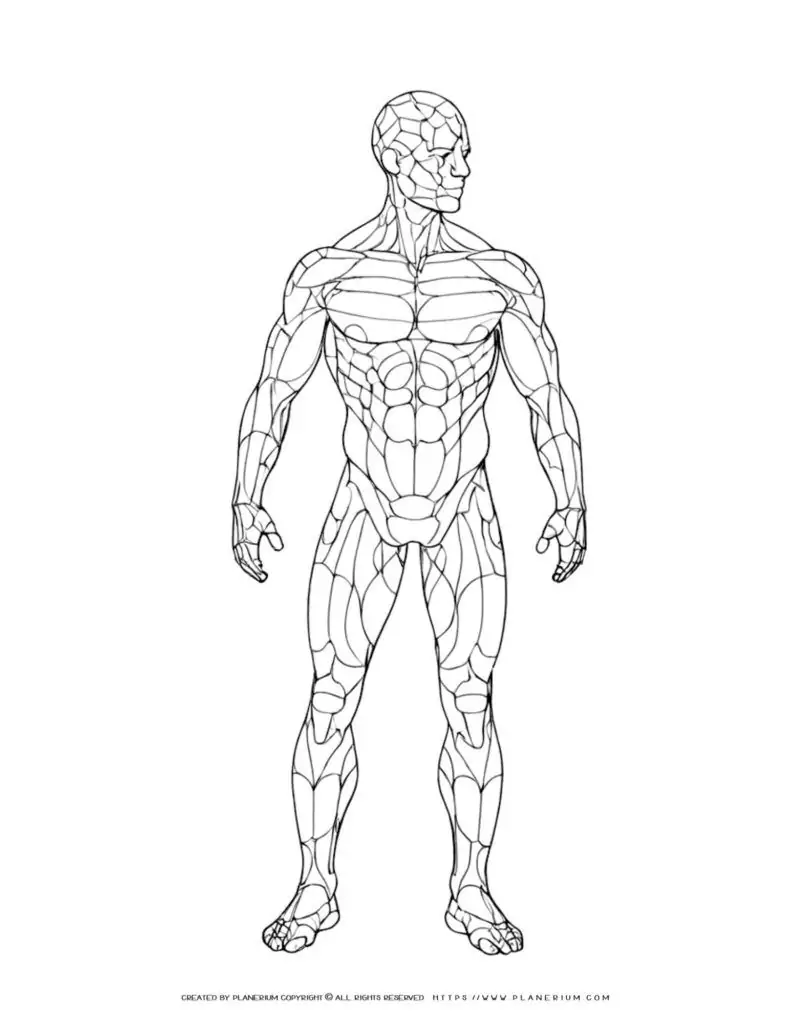
Printable male muscular system coloring page showing major muscle shapes across the human body. A useful visual resource for Grades 4-6 studying muscles, the human body, body systems, and basic anatomy.
Grades
Fourth
Fifth
Sixth
Tags
Male Muscular System Coloring Page
Help students explore the human muscular system with this printable male body muscles coloring page. The full-body illustration shows the shapes and locations of major muscle groups, giving upper elementary students a clear visual starting point for learning how muscles are arranged throughout the body.
Designed primarily for Grades 4-6, approximately ages 9-12, this printable can be used during science lessons about the human body, muscles, movement, and body systems.
Students can color different muscle areas, observe how muscles are distributed across the body, and use the illustration alongside classroom discussions, books, videos, or other anatomy resources.
Topics This Printable Can Support
This male muscular system printable can be used with elementary science topics such as:
- human body
- muscular system
- human muscles
- body systems
- muscles and movement
- basic human anatomy
- how the body moves
- bones and muscles
- health and the human body
Classroom Activity Ideas
Color the Muscular System
Ask students to color the different muscle areas on the figure. They can use contrasting colors to make neighboring muscle groups easier to distinguish.
For an introductory activity, the goal does not need to be memorizing individual muscle names. Students can first observe how many different muscles work together throughout the body.
Where Are Our Muscles?
Before coloring, ask students to locate muscles in different areas of their own bodies, such as their arms, shoulders, abdomen, and legs.
Students can then find the corresponding areas on the printable and discuss where muscles are concentrated and why the body needs muscles in so many different places.
Muscles and Movement
Connect the printable to a lesson about movement.
Ask students to perform simple movements such as bending an elbow, raising an arm, standing on their toes, or bending a knee. Then use the muscle diagram to discuss which areas of the body are involved.
The activity helps students connect an anatomical illustration with the movements they experience in their own bodies.
Compare the Outside and Inside of the Body
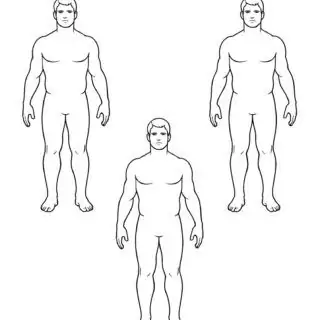
Pair the muscular system page with Planerium’s Male Body Outline.
First examine the simple external body outline. Then compare it with the muscular system illustration and discuss what lies underneath the body’s outer shape.
This creates a simple introduction to the idea that the human body is made of different systems and structures working together.
Create a Muscle Color Key
Older elementary students can create a simple color key for several muscle areas introduced during the lesson.
For example, the teacher may select four or five muscle groups being studied and ask students to use the same color for each corresponding area on the printable.
Use as a Science Notebook Visual
Students can add the completed printable to a human body or science notebook and write several facts they learned about muscles beside or below the illustration.
Skills and Learning Goals
Students can use this printable to practice:
- recognizing the muscular system as a human body system
- identifying where muscles are located in the body
- making connections between muscles and movement
- observing anatomical structures
- comparing different representations of the human body
- using visual information during science learning
- developing basic human body vocabulary
- careful coloring and visual attention
Teacher Tip
For elementary students, focus first on the big idea of the muscular system rather than asking students to memorize a long list of individual muscle names.
Use the printable to help students understand that muscles are found throughout the body and work with bones and joints to produce movement.
Once students understand this overall structure, introduce the names of selected major muscles that are appropriate for your grade level.
Extend the Human Body Lesson
For a simpler external view of the body, use the Male Body Outline. Students can compare the plain body outline with the muscular system and discuss what is visible from the outside versus what is found beneath the skin.
The Human Muscle Anatomy Outline – Full Body Educational Diagram provides another visual representation of human muscles that can be used for comparison or further anatomy study.
You can also use the Human Body Detailed Outline Template when students need a more general human body visual for labeling or human body activities.
For lessons comparing different views of the body, the Human Body Back View Outline can help students consider how the body looks from another perspective.
Frequently Asked Questions
What grade levels is this muscular system coloring page best for?
This printable is best suited for Grades 4-6, approximately ages 9-12. Grade 3 students can also use it as an introductory visual with teacher guidance.
What does this male muscular system printable show?
The printable shows a full-body male figure with visible muscle shapes. It helps students observe where muscles are located throughout the human body and how the muscular system is organized.
Can I use this printable to teach the muscular system?
Yes. It works well as a visual introduction or extension activity during an elementary science unit about the muscular system, human body systems, muscles and movement, or basic anatomy.
Do students need to know the names of all the muscles?
No. For upper elementary students, teachers can begin with the overall muscular system and introduce only the major muscle groups appropriate for their curriculum.
The printable can also be used without labeling as a visual observation and coloring activity.
How can students use this muscular system coloring page?
Students can color different muscle areas, compare muscles in different parts of the body, create a simple color key, connect muscles to body movements, or add the finished page to a science notebook.
Can this printable be used for a lesson about movement?
Yes. Ask students to perform simple movements such as bending an arm or knee and then identify the corresponding area on the muscle illustration. This helps connect the muscular system to students’ everyday movement.
Is this a labeled anatomy diagram?
No. The printable provides a visual representation of the male muscular system but does not include a complete set of anatomical labels. Teachers can use it alongside age-appropriate reference materials if students are learning the names of specific muscles.
What other Planerium printables can I use with this page?
Pair it with the Male Body Outline to compare the external body with the muscles underneath, or use the Human Muscle Anatomy Outline for additional muscular-system study.
More in this series