Carnival Masks Shadows Matching Activity
1819
Views
22
Prints
3
Saves
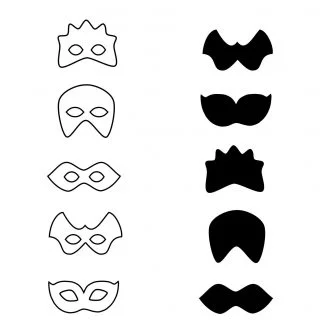
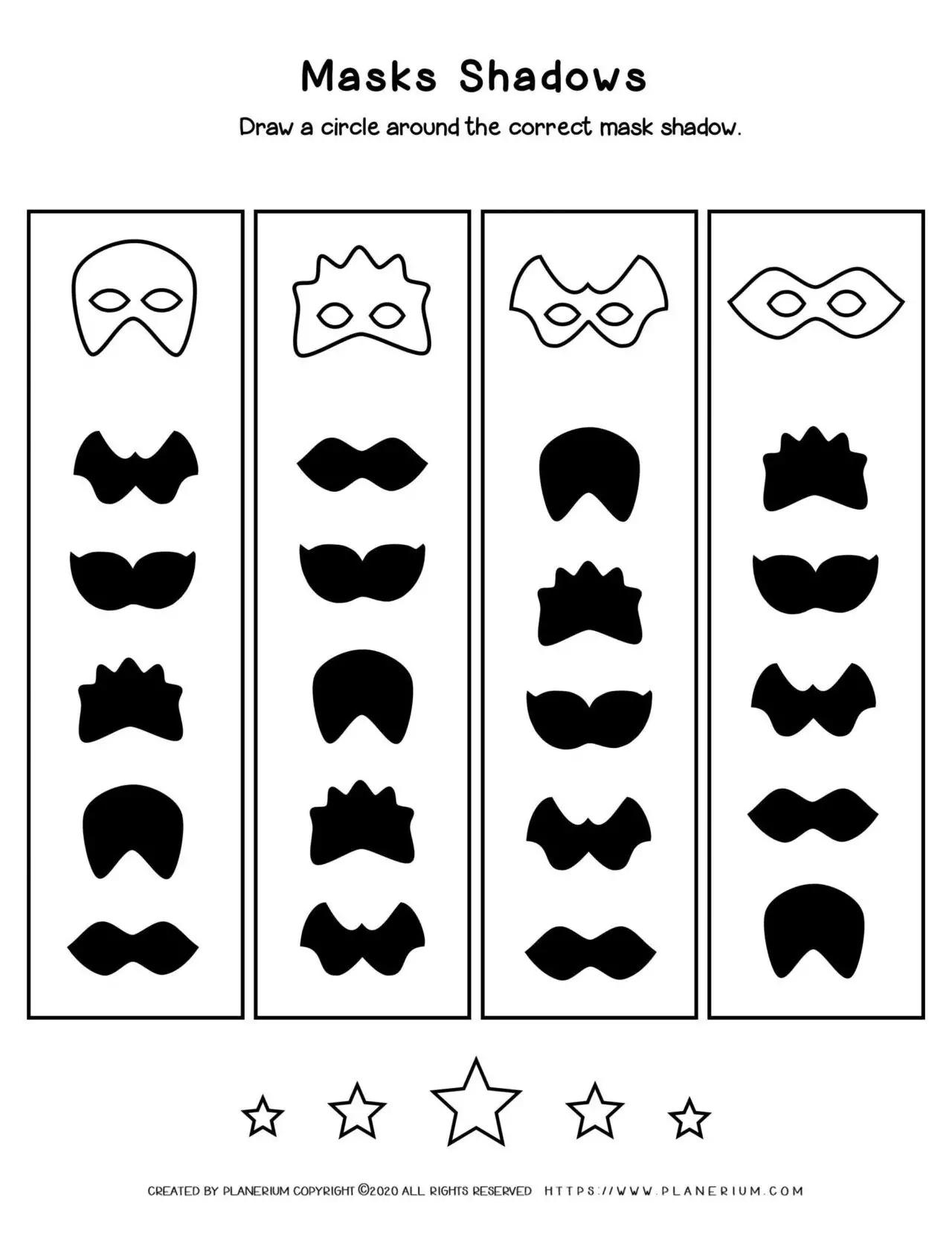
Carnival Masks Shadows Matching worksheet for students in classroom or homeschool. Learners draw lines to match carnival mask images with their correct shadow pairs; includes mask illustrations, shadow pairs, and a line-drawing matching activity to build visual discrimination, visual tracking, and fine motor eye-hand coordination.
Grades
K
First
Second
Carnival Masks Shadows Matching Activity Worksheet
What Learning Goal Can This Worksheet Support?
This single printable asks students to draw a line between each carnival mask image and its correct shadow pair, giving teachers a quick way to assess and build visual discrimination and fine motor control through a focused shadow matching practice.
Skills Practiced:
- Visual discrimination of image versus shadow
- Matching images to their correct shadow pair
- Fine motor control for drawing connecting lines
- Visual tracking and eye-hand coordination
- Attention to mask detail and shape differences
Teacher-Friendly Ways to Use This Worksheet:
- Use as a brief warm-up: give students the Carnival Masks shadow matching printable and have them draw a line between each image and shadow pair to settle attention and check visual skills.
- Place in a small-group center: let students rotate through the shadow matching activity so you can observe eye movement and motor skills while supporting students who need more guidance.
- Assign to early finishers or enrichment: offer the Level: Easy shadow exercise to reinforce visual discriminating abilities (a foundation that can make it easier for kids to recognize letters and numbers) and provide low-prep practice.
FAQ
It helps assess and build visual discrimination and fine motor control by asking students to draw a line between each mask and its matching shadow. The focused practice also supports visual tracking, eye-hand coordination, and attention to subtle shape differences.
Use it as a brief warm-up to settle attention, place it in a small-group center so you can observe and assist, or give it to early finishers as low-prep enrichment. Each option provides quick practice of image-to-shadow matching and line-drawing control.
For students who need support, use the activity in a small group with teacher modeling and guided assistance so you can observe eye movement and motor skills. For students who need more challenge, offer it as enrichment for early finishers to complete more independently and reinforce visual discrimination.
Use follow-up tasks that apply the same visual-discrimination skills to academic content, since the worksheet builds a foundation for recognizing letters and numbers. For example, move on to matching letter or number shapes to outlines to transfer attention to detail and tracking skills.
Look for correct image-shadow pairings, controlled smoothness of connecting lines, and whether students notice small shape differences. Use small-group rotations to record observations of visual tracking and whether students require additional guidance.
More in this series