
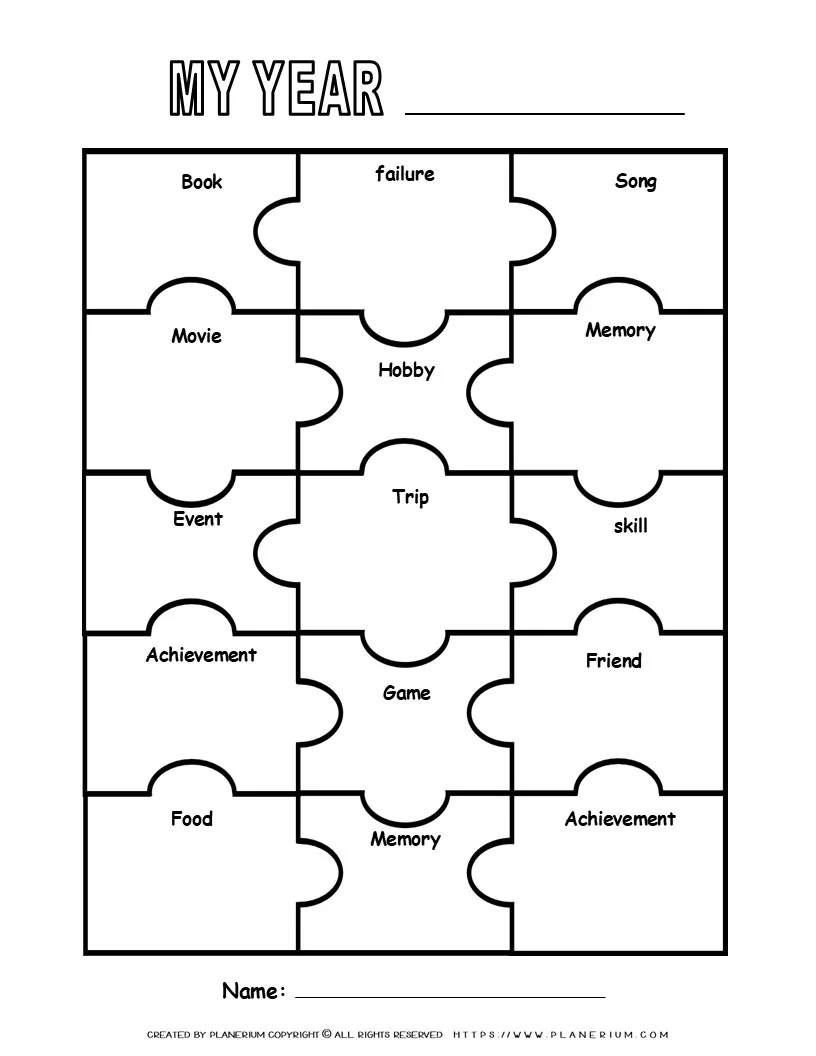
Creative Year Reflection Puzzle Shape Worksheet for Kids and Students
338
Views
3
Prints
2
Saves
Creative Year Reflection Puzzle Shape Worksheet for Kids and Students
What Creative Year Reflection Puzzle Shape Worksheet Teaches:
This printable puzzle-shaped worksheet guides kids and students through a positive, structured look back at the year, helping them name memories, celebrate achievement, and set simple goals for next steps.
Grades
Second
Third
Fourth
Fifth
Creative Year Reflection Puzzle Shape Worksheet for Kids and Students
What Creative Year Reflection Puzzle Shape Worksheet Teaches:
This printable puzzle-shaped worksheet guides kids and students through a positive, structured look back at the year, helping them name memories, celebrate achievement, and set simple goals for next steps.
Skills Practiced with Creative Year Reflection Worksheet:
- Reflection and memory recall: prompts encourage students to remember favorite events, songs, trips or moments with a friend.
- Goal-setting and self-assessment: pieces invite learners to identify a skill or hobby they want to grow.
- Communication and social skills: sharing completed puzzle pieces supports classroom conversations and reflective discussions.
- Fine motor and writing practice: cutting, coloring, and filling in answers strengthens coordination while reinforcing learning through creative worksheets.
How to Use Creative Year Reflection Puzzle Shape Worksheet:
- Group circle: complete one piece each, then assemble the puzzle and talk about highlights and wishes for the new-year.
- Independent reflection: use as a quiet writing or art activity to document favorite book, movie, game, food, or event memories.
- Portfolio or display: keep completed puzzles as a visual record of achievements and goals, or post them on a class wall to inspire others.
FAQ
It guides a positive, structured look back at the year to practice reflection and memory recall, goal-setting and self-assessment, communication and social skills, plus fine motor and writing practice through cutting, coloring, and filling in answers.
Use it in a group circle with each student completing one piece then assembling the puzzle and discussing highlights and wishes for the new year; use it as a quiet independent writing or art activity to document favorite books, movies, games, food, or events; or keep completed puzzles in a portfolio or on a class wall as a visual record.
For support, have students complete one piece at a time in a group circle, allow drawing instead of writing, or focus on a single prompt; for challenge, ask learners to share multiple memories, choose a skill or hobby to grow, and lead a discussion that deepens their self-assessment.
Assemble completed puzzles on a classroom wall or keep them in student portfolios as visual records of achievements and goals, then use the display or portfolio to prompt follow-up conversations about progress and new-year wishes.
Look for clear memory recall (named events, songs, trips, or moments with a friend), evidence that students identify a skill or hobby they want to grow, active participation in sharing and discussions, and completed cutting, coloring, and writing; keep completed puzzles to track development over time.