
Original printable
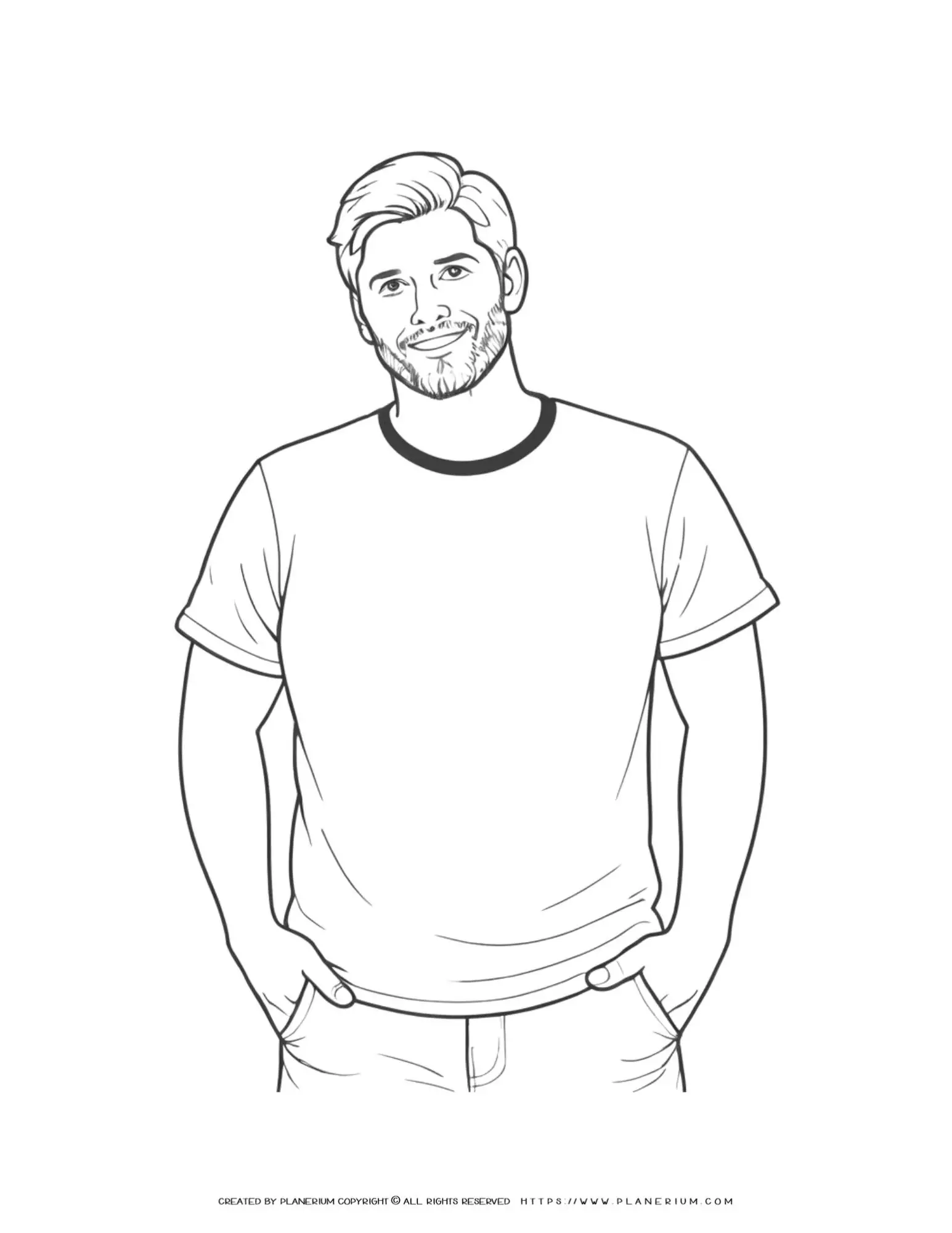
Introducing our Young Happy Male with Beard Torso Standing with Hands in His Jeans Pockets Outline Coloring Page! Perfect for students and adult learners alike, this educational printable offers a range of benefits to captivate and inspire creativity. Explore its unique features
Learning Objective
Students will express creativity by coloring a character outline while developing fine motor skills.
Teacher-Selected Inputs
Why this printable fits
This coloring page encourages kids to explore their creativity and improves fine motor skills, making it ideal for Kindergarten learners in special education settings.
Key Vocabulary
- coloring
- outline
- creativity
- expression
- art
Prerequisite Skills
- Basic color recognition
- Using crayons or colored pencils
Materials
- Young Happy Male Outline Coloring Page (printable)
- Crayons or colored pencils
- Example colored page for demonstration
Prep
- Print the coloring page for each student.
- Gather crayons or colored pencils.
Lesson Steps
- Introduction5 minTeacher actions: Gather students in a circle and show them the coloring page. Explain that today they will be coloring a picture of a happy man. Ask them how many colors they think they will use. Emphasize that there’s no right or wrong way to color.Teacher script: Today, we are going to color this happy man! You can use any colors you like to make him look beautiful!Example / model: Show a fully colored version of the same outline as an example.Printable use: Pass out the coloring page to each student.Move on when: Make sure all students have their coloring pages and understand the goal of the activity.Support if needed: Provide extra examples or color suggestions for students who might struggle.
- Modeling10 minTeacher actions: Demonstrate coloring techniques by coloring a portion of the image in front of the class. Use clear language to describe your actions, such as choosing colors and applying them gently. Encourage students to pay attention to staying within the lines.Teacher script: Look, I’m going to use blue for his shirt. I will color gently so I stay inside the lines!Example / model: Color a small section of the shirt and a portion of the hair to show how to layer colors.Printable use: Show students the colors you chose on their own pages, and help them feel excited about their choices.Move on when: Observe students as they follow along, ensuring they are attempting to color in a similar way.Support if needed: Sit near students who may need extra help or encouragement.
- Independent Practice10 minTeacher actions: Encourage students to start coloring their own pages. Walk around the classroom to provide guidance and positive feedback. Remind them to experiment with different colors and techniques they observed during modeling.Teacher script: Now it’s your turn! Remember to have fun and try new colors!Example / model: Provide examples of different colored shirts or hair to inspire creativity.Printable use: Students will focus on their coloring pages, using crayons and colored pencils as they explore their creativity.Move on when: Watch for students actively engaging in their coloring, experimenting with different colors and techniques.Support if needed: Offer one-on-one assistance to students who are hesitant to choose colors.
- Closure5 minTeacher actions: Gather students back in a circle and ask them to share their coloring choices. Highlight various sections they colored and encourage them to talk about their favorite colors.Teacher script: Who would like to share their favorite color choice for this character?Example / model: Highlight a few colorful pages as students share their creations.Printable use: Collect the pages to review students’ creative expressions while discussing their work with the group.Move on when: Ensure that all students are eager to share and that they have completed their coloring.Support if needed: Encourage shy students to share by prompting them with specific questions about their colors.
Checks for Understanding
- Students are actively participating in the coloring activity.
- Students can describe their color choices when prompted.
- Students demonstrate fine motor skills by coloring within the lines.
Success Criteria
- Students will color their pages with a variety of colors.
- Students will share their artwork and explain their color choices to the group.
Differentiation
- Provide larger crayons for students needing more support with fine motor skills.
- Allow students to use finger painting techniques instead of traditional coloring if desired.
Accommodations
- Pair students who may need help with a buddy who can assist them during the coloring process.
- Provide adaptive materials, like grip-enabled markers, for students with fine motor challenges.
Common Misconceptions
- Students may think they need to use traditional colors; remind them that creativity means using any colors they love!
- Some students might struggle to stay within the lines and get frustrated; encourage a 'messy' art mindset.
Assessment
- Observe students' engagement during the coloring activity.
- Collect completed coloring pages to assess creativity and fine motor skills.
Extensions
- Ask students to create a story about the character they just colored.
- Encourage students to create their own character outline for future coloring activities.
How to Use the Printable
- This printable serves as the main activity where students can express their creativity through coloring.
- It acts as a tool in developing fine motor skills while allowing artistic expression.
Teacher Notes
- Be enthusiastic about students' creativity and choices.
- Create a calm atmosphere; recognize that some students may need more time to finish. Consider providing a calming space for those who feel overwhelmed. See if any students show a特别
- interest in creating backstories for their characters after the coloring activity.