
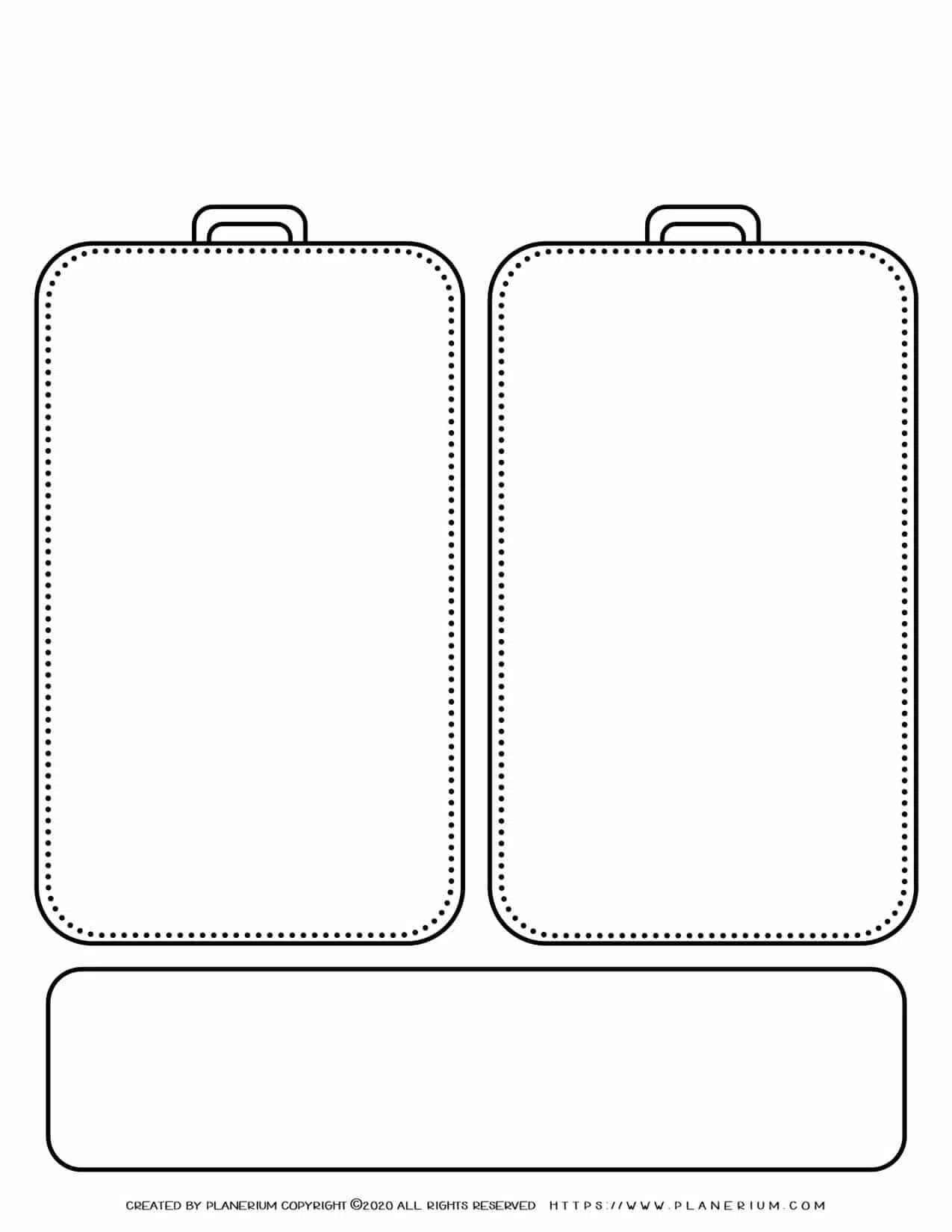
Chart with Two Columns and One Container
2318
Views
37
Prints
3
Saves
Free printable two-column graphic organizer with a shared bottom section for comparing two topics and recording a conclusion, summary, or combined idea. A flexible classroom template for Grades 2-6.
Two-Column Graphic Organizer with Shared Summary Section
This free printable two-column graphic organizer helps students compare two topics, organize information side by side, and then bring their thinking together in one shared section.
The template includes two large columns and one larger container below them. Students can use the columns for separate ideas, examples, characteristics, or evidence, and use the bottom section for a conclusion, summary, common idea, or final response.
This makes the organizer especially useful for activities that move from comparison to synthesis.
Classroom Ideas
Use this printable graphic organizer to help students:
- Compare two characters and write a conclusion
- Compare two animals, plants, places, or objects
- Organize advantages and disadvantages
- Record two viewpoints and summarize the main idea
- Compare two texts or sources
- Sort information into two categories and write a final takeaway
- Record similarities and differences
- Compare two scientific concepts
- Organize evidence before writing a response
- Prepare ideas for a short compare-and-contrast paragraph
Suggested Grade Levels
This graphic organizer is especially useful for Grades 2-6.
For younger students, teachers can add simple headings or pictures to the two columns and use the bottom section for one short sentence or drawing.
Older students can use the organizer more independently for comparison, evidence gathering, writing preparation, and summarizing.
Why Use Two Columns and a Shared Section?
A traditional two-column chart helps students separate information into two categories.
This layout adds an important extra step: bringing the information together.
The shared bottom section can be used for:
- A conclusion
- A summary
- A common idea
- A final comparison
- A key similarity
- A written response
- A decision based on the information above
This helps students move beyond simply listing information and encourages them to explain what the comparison means.
Ideas Across Subjects
Language Arts:
Compare two characters, texts, settings, or viewpoints in the columns and write a conclusion or summary below.
Science:
Compare two animals, habitats, materials, or scientific processes and use the shared section for a key finding.
Social Studies:
Compare two countries, communities, historical figures, events, or perspectives and summarize the main difference or connection.
Writing:
Use the two columns to collect evidence or ideas and the bottom section to draft a concluding sentence or main takeaway.
Decision-Making Activities:
Use the columns for two options and the shared section for a final choice and explanation.
Explore More Graphic Organizers
Explore the full Graphic Organizer Templates collection for more free comparison charts, sequence organizers, and visual thinking templates.
You may also find these layouts useful:
- Blank Three-Column Chart – useful when students need to compare or sort information into three broad categories.
- 3-Column 6-Row Chart – useful for more structured comparison across several entries.
- 3-Column 2-Row Chart – useful for short comparison activities.
- Five-Section Graphic Organizer with Headline – useful for organizing one main topic into several supporting ideas.
FAQ
What is this two-column graphic organizer used for?
It can be used to compare two topics, organize two sets of information, and then write a shared conclusion, summary, or final idea.
What should students write in the bottom section?
The bottom section can contain a conclusion, summary, common idea, important similarity, final decision, or written response based on the two columns above.
Can this organizer be used for compare-and-contrast writing?
Yes. Students can collect information in the two columns and use the shared section to prepare a concluding sentence or main comparison.
What grade levels is this printable suitable for?
It is especially useful for Grades 2-6. Younger students can use short labels or drawings, while older students can add more detailed notes and written conclusions.
Can students draw instead of write?
Yes. The columns and shared section can be used for words, short sentences, symbols, diagrams, or drawings.