
Original printable
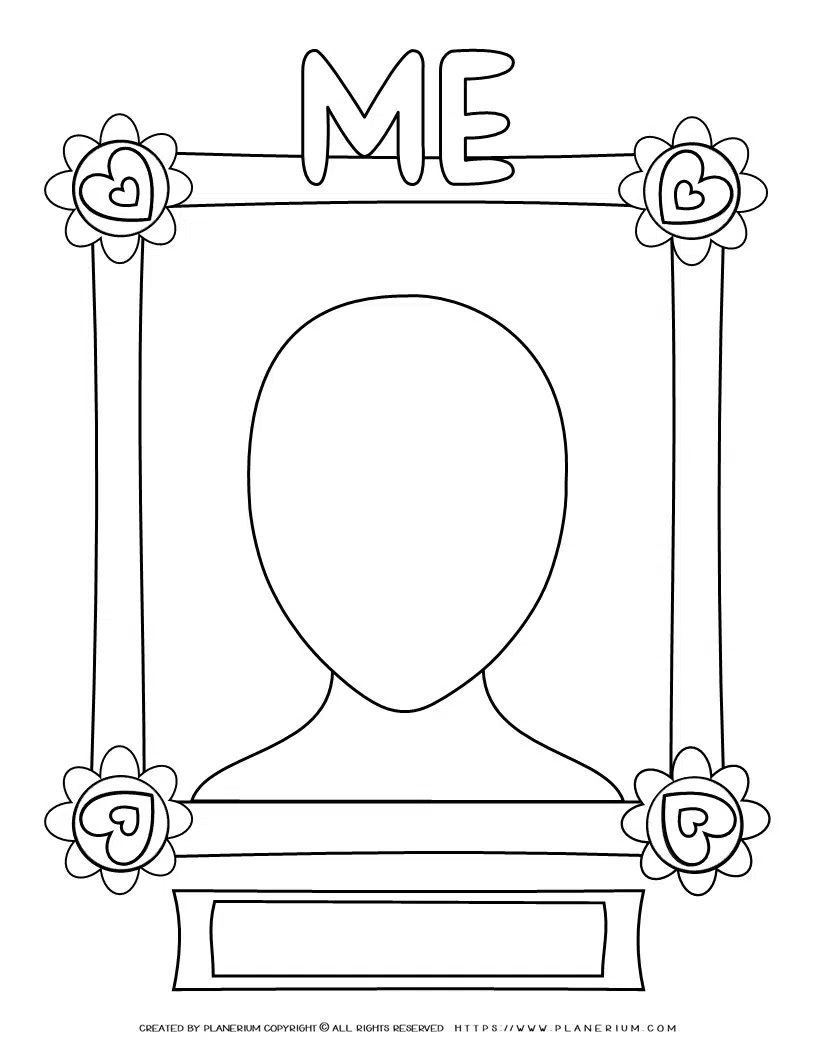
Self Portrait template for classroom or homeschool students: use this black-and-white coloring-page style sheet to draw their face, color the surrounding frame, and add their name on the tag; includes a built-in frame and "Me" label for display. Promotes observation, fine-motor c
Learning Objective
Students will express their identity by creating a self-portrait using the provided template, focusing on their unique features and personal details.
Teacher-Selected Inputs
Why this printable fits
This printable provides a structured way for students to explore their individuality and creativity through the self-portrait activity.
Vocabulary
PRE-TEACH
- Identity: Who you are.
- Portrait: A drawing or picture of a person.
- Creative Expression: Conveying thoughts, feelings, or ideas through art.
USE DURING LESSON
- Self-portrait
- Draw
- Decorate
- Express
- Me
Materials
- Self Portrait template
- Colored pencils or crayons
- Mirrors or photos for reference
Prep
- Print the Self Portrait template for each student.
- Gather colored pencils or crayons for the class.
Lesson Steps
- Introduction15 minTeacher actions: Welcome students and introduce the self-portrait activity; display an example.Teacher script: Today, we will create a self-portrait! Look at my example and think about the unique things that make you who you are.Example / model: Show a completed example of a self-portrait highlighting unique features.Printable use: Introduce the Self Portrait template and explain its significance in representing individuality.Move on when: Ensure students understand what a self-portrait is and have their materials.Support if needed: Provide guidance on choosing distinguishing features to include.
- Guided Practice15 minTeacher actions: Demonstrate how to outline distinctive facial features; circulate to assist students as they start.Teacher script: Watch closely as I show you how to sketch your face with details that represent you.Example / model: Demonstrate drawing distinctive features like hairstyle, eye shape, and expressions on the board.Printable use: Guide students in beginning their self-portrait with mirrors or reference photos for accuracy.Move on when: Check if students have started outlining recognizable features.Support if needed: Offer suggestions on patterns or decorations that reflect their personality.
- Independent Work15 minTeacher actions: Students work on their portraits independently; encourage them to think creatively about details.Teacher script: Now it’s your turn! Fill your self-portrait with colors and details that celebrate your identity!Example / model: Encourage students to think about colors that represent them or symbols they love.Printable use: Complete the self-portrait by coloring and adding personal artistic flair.Move on when: Look for students incorporating colors and personal details that express themselves.Support if needed: Share a vocabulary card with examples of words for colors and decorative elements.
- Closure15 minTeacher actions: Facilitate a sharing session where students present their portraits and talk about their choices.Teacher script: Turn to your partner and share what makes your self-portrait special and unique.Example / model: Students engaging in sharing, like explaining why they chose certain colors or decorations.Printable use: Create a class gallery by displaying their portraits prominently for all to see.Move on when: Observe students discussing their artwork and connecting it back to their identities.Support if needed: Encourage use of sentence prompts for sharing, such as 'I chose this color because ___.
Formative Check
- Step: Guided Practice
- Ask students to: Demonstrate understanding by explaining their drawing choices to the teacher.
- Look for: Students discussing how their features represent their identity.
Success Criteria
- Students can identify at least 2 key details or vocabulary words connected to Art.
- Students can explain one detail included that represents their identity.
Differentiation
Support: Use a word bank card with vocabulary to assist students in expressing their ideas.
Scaffold tool: Word Bank Card
Standard: Create a self-portrait that captures their unique identity using the template provided.
Extension: Incorporate symbols or designs that illustrate their interests or favorite activities around their portrait.
Early Finishers: Compose a few sentences that describe the meaning behind their chosen colors and decorations.
Accommodations
- Use additional time for students who require it.
- Allow partnerships for students needing assistance or encouragement.
Common Misconceptions
- Some students may believe a self-portrait must be an exact likeness rather than a creative interpretation.
Assessment
- Observe the unique details included in their self-portrait to assess understanding of self-expression.
- Evaluate students' verbal reflections on their portraits during the sharing session.
Teacher Notes
Standards
- CCSS.ELA-LITERACY.SL.2.1: Engage effectively in collaborative discussions with peers.
- CCSS.ELA-LITERACY.W.2.3: Write narratives that recount personal experiences.
IF SHORT ON TIME
- Keep: Introduction and closure phases.
- Skip or shorten: Condense the independent work phase by allowing group coloring sessions.
FOLLOW-UP OPTIONS
- Explore various cultural art styles in portraiture.
- Have students create a collaborative mural that represents the classroom community.
- Organize an art exhibit showcasing their self-portraits during a school event.
HOME CONNECTION
Ask your child to create a self-portrait at home and share it with the family.